Why Meditation Tone Matters for Energy and Balance

Meditation tone is defined as the deliberate use of vocal or ambient sound qualities that guide the mind toward focused awareness and physiological relaxation. Most people treat it as background noise. It is not. The sound you hear or produce during meditation directly shapes your nervous system response, your brain wave activity, and how much energy you carry out of a session. Understanding why meditation tone matters is the difference between a practice that leaves you sharper and a practice that just makes you sleepy.
Why meditation tone matters for your nervous system
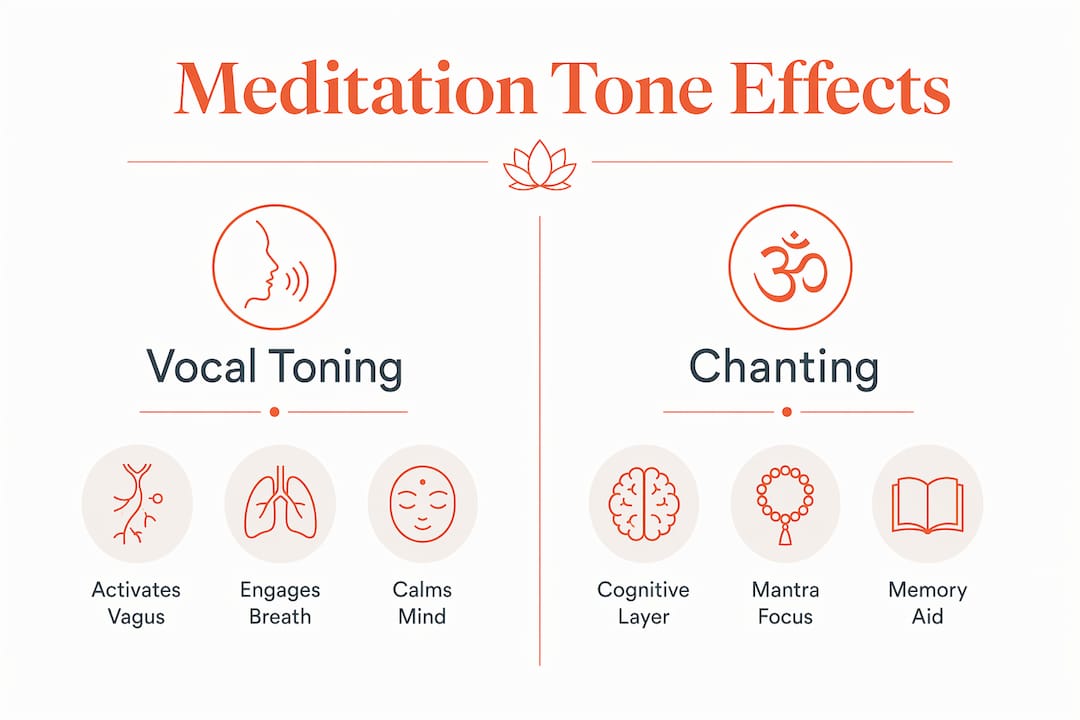
Vocal tone and chanting do something silent meditation cannot replicate on its own. Vocalization and chanting reduce anxiety more effectively than silent meditation by engaging respiratory mechanics and vagal tone. The vagus nerve, which runs from your brainstem to your gut, is the primary highway of the parasympathetic nervous system. Activating it through sustained sound is one of the fastest ways to shift your body out of a stress state.
Sustained, repetitive tones slow breath, activate the vagus nerve, and promote prefrontal cortex state changes. The prefrontal cortex governs decision-making, emotional regulation, and focused attention. When tone activates it, you get clearer thinking and steadier mood, not just relaxation.

EEG research confirms this at the neural level. Vocalization toning is associated with increases in alpha and theta brain wave power, commonly linked to relaxation and meditative states. Alpha waves signal a calm, alert mind. Theta waves appear during deep focus and creative insight. Tone produces both.
Sound also suppresses the Default Mode Network, the brain region responsible for mind-wandering, rumination, and self-referential thought. Sound complexity with continuous subtle changes maintains brain engagement and suppresses Default Mode Network activations that disrupt meditation. A wandering mind is not a failing mind. It is simply a mind without a strong enough anchor.
“Vocal toning acts as a diagnostic and tuning tool for the body, shifting the nervous system out of stress and anchoring attention.” — Sonic Being
Here is what this means in practice:
- Alpha and theta waves increase during vocal toning, producing the same neural signature as deep meditation
- Heart rate variability improves with consistent tone use, a direct marker of nervous system resilience
- Default Mode Network suppression reduces mind-wandering and keeps attention anchored to the present
- Vagal activation through sound lowers cortisol and supports emotional regulation faster than breath alone
Does tone quality matter more than how pleasant it sounds?
The most common mistake people make with meditation tone is optimizing for pleasantness. A smooth, perfectly produced sound feels relaxing. It is also neurologically inert. Perfectly smooth or machine-generated sounds can cause habituation and distract the mind away from open awareness. When the brain stops detecting novelty, it disengages. The Default Mode Network reactivates. You are back to ruminating.
Effective tone is subtly complex. Slight harmonic shifts, minor variations in pitch, and organic imperfections keep the brain engaged without demanding conscious attention. Think of the difference between a Tibetan singing bowl and a synthesized sine wave. Both produce sustained sound. Only one keeps your brain tracking.
Tone also functions as a therapeutic tool, not a musical performance. This distinction matters. Music with a recognizable melody competes with your cognitive training goals. Music with noticeable melody or rhythm competes with breath focus and cognitive training goals. Your attention shifts from internal awareness to the song. That is the opposite of what you want.
Here is how to evaluate a meditation tone before committing to it:
- Listen for subtle variation. The tone should shift slightly over time, not loop identically every few seconds.
- Check your attention after 60 seconds. If you are listening to the tone rather than using it as a background anchor, it is too prominent.
- Notice harmonic complexity. A single flat frequency is less effective than a tone with layered overtones, like a singing bowl or a sustained vocal hum.
- Avoid sudden changes. Tones that shift unexpectedly in pitch or volume pull attention outward and break the meditative state.
- Test your energy after the session. Effective tone leaves you alert and clear. If you feel groggy, the tone may be too sedating.
Pro Tip: Record yourself humming a single sustained note for 30 seconds. Play it back and notice where your attention goes. If you start analyzing the sound, it is too interesting. The goal is a tone that feels like air: present, necessary, and invisible.
Vocal toning vs. chanting vs. ambient soundscapes: which works best?
These three approaches share a common goal but produce different results. Choosing the right one depends on your experience level, your session goals, and how much active participation you want.
| Approach | Core mechanism | Best for | Cognitive effect | Limitation |
|---|---|---|---|---|
| Vocal toning | Self-produced sustained sound | Nervous system reset, body awareness | Vagal activation, alpha/theta increase | Requires practice; awkward for beginners |
| Chanting | Rhythmic repetition of syllables or phrases | Focus, anxiety reduction, group practice | Default Mode Network suppression, breath regulation | Can become rote; loses effect if mechanical |
| Ambient soundscapes | External sound environment (bowls, nature, drones) | Beginners, passive listening, sleep prep | Mild Default Mode Network suppression, relaxation | Less neurologically active than vocal methods |
Vocal toning is the most physiologically direct method. You produce the sound, which means your breath, posture, and nervous system are all engaged simultaneously. Vocal toning serves as a biofeedback mechanism revealing tension held in the body, which can then be released through sustained sound. A tight throat or shallow tone tells you something about your current stress state. That feedback is unavailable with external audio.
Chanting adds a cognitive layer. The repetition of a mantra or syllable, such as “Om” or “So Hum,” gives the mind a specific object to return to. This is particularly effective for people whose minds wander aggressively during silent practice. The active audible anchor limits mind-wandering better than abstract breath observation.
Ambient soundscapes work well for beginners and for passive sessions like sleep preparation or background focus work. They require no active participation, which lowers the barrier to entry. The tradeoff is reduced neurological engagement. Experienced meditators often find ambient sound insufficient as a sole anchor once their practice deepens.
Pro Tip: Start with ambient soundscapes for your first two weeks. Once you can hold attention for five minutes without significant wandering, introduce vocal toning for one session per week. The contrast will show you immediately how much more engaged your nervous system becomes.
How to apply meditation tone for energy, clarity, and emotional balance
The goal is not to find the perfect tone. The goal is to use tone consistently enough that your nervous system learns to respond to it. Consistency in meditation is a stronger predictor of benefits than session length, with small daily sessions showing comparable efficacy to longer blocks.
Start with these steps:
- Choose your tone type. Pick one: vocal toning, chanting, or ambient soundscape. Do not mix methods in the first month.
- Set a session length of 10–12 minutes. Research establishes 10–12 minutes as the biological floor to trigger measurable neuroplasticity and cognitive benefits.
- Use tone as an anchor, not entertainment. The sound should sit at the edge of your awareness, not at the center of it.
- Match tone to your goal. Lower, slower tones (deep hums, bass drones) support relaxation and nervous system downregulation. Higher, brighter tones (overtone singing, higher-pitched bowls) support alertness and energy.
- Practice 4–7 days per week. Practicing meditation 4 to 7 days a week with consistent short sessions produces structural brain changes and stress reduction comparable to longer sessions.
For energy specifically, the tone characteristics that matter most are brightness, variation, and moderate tempo. A flat, low drone will calm you. A gently shifting, mid-range tone with subtle harmonic complexity will leave you alert. Apps that track your session progression and adapt tone guidance over time, like those reviewed in this 2026 meditation app buyer’s guide, make this calibration easier to maintain.
Pro Tip: If your primary goal is energy rather than calm, avoid using meditation tones associated with sleep. Binaural beats in the delta range (0.5–4 Hz) are designed for deep sleep states. For energy and clarity, look for tones in the alpha range (8–12 Hz) or ambient soundscapes with subtle rhythmic variation.
Emotional balance comes from regularity, not intensity. Two 10-minute sessions daily yield similar anxiety reduction as one 20-minute session. Splitting practice into two 10-minute sessions yields similar anxiety reduction as one 20-minute session. That means a morning tone session and a brief midday reset can do more for your emotional stability than a single long weekend practice.
Key takeaways
Meditation tone is a physiological tool, not an aesthetic preference. The right tone actively shapes your brain waves, vagal activation, and emotional state in ways that silence alone cannot.
| Point | Details |
|---|---|
| Tone activates the vagus nerve | Sustained vocal or ambient sound engages the vagus nerve faster than breath observation alone. |
| Subtle complexity beats perfection | Tones with slight harmonic variation prevent brain habituation and keep the Default Mode Network suppressed. |
| Vocal toning outperforms ambient sound | Self-produced tones provide biofeedback and deeper nervous system engagement than passive listening. |
| Consistency drives results | Daily sessions of 10–12 minutes produce neuroplastic changes; frequency matters more than session length. |
| Match tone to your goal | Lower tones support relaxation; mid-range tones with variation support energy and mental clarity. |
What I have learned about tone that most guides miss
I have spent years watching people build meditation practices that plateau. They sit consistently, they breathe correctly, and they still feel like nothing is changing. Almost every time, the issue is the sound environment. Either they are meditating in silence and losing the battle with their own thoughts, or they are using music that is too engaging and spending the session listening rather than practicing.
The insight that shifted things for me was treating tone as a nervous system calibration tool, not a mood setter. When I started using vocal toning before a session rather than during it, I noticed my ability to settle into stillness improved within the first minute. The tone was doing the regulatory work upfront, so the meditation itself could go deeper faster.
The other thing most guides miss is the energy dimension. Meditation is consistently sold as a path to calm. For some people, calm is not the goal. They are already flat. They need activation, not sedation. A mid-range tone with subtle rhythmic complexity does something a low drone cannot. It wakes the prefrontal cortex up rather than putting it to sleep. If you want to understand how daily meditation builds momentum rather than just stillness, tone selection is where that work starts.
My honest recommendation: experiment with your own voice before spending money on curated soundscapes. Hum. Sustain a single note. Notice what happens in your chest, your throat, your attention. The feedback is immediate and personal in a way no external audio can match.
— Giorgio
How Mosaiic helps you find the right tone for your practice
Mosaiic is built around one idea: meditation should leave you fuller, not sleepier. Every session is generated around what is actually draining your energy that day, whether that is burnout, low motivation, or a rough stretch at work.
The app writes and narrates a personalized 5-minute session based on your input, and each day’s session builds on the last. Tone, pacing, and guidance evolve as your practice deepens. That means you are never stuck with a generic soundscape that no longer fits where you are. If you are ready to stop guessing and start practicing with intention, start with Mosaiic and let the session come to you.
FAQ
Why does meditation tone matter more than silence?
Vocal and ambient tones activate the vagus nerve and suppress the Default Mode Network, which silent meditation alone struggles to do consistently. They provide a physiological anchor that reduces mind-wandering and accelerates nervous system regulation.
What makes a meditation tone effective vs. distracting?
An effective tone sits at the edge of awareness: present but not demanding attention. Tones with subtle harmonic variation maintain brain engagement, while tones with prominent melody or sudden changes become the object of attention and reduce meditation effectiveness.
How long should a tone-based meditation session be?
Research establishes 10–12 minutes as the minimum to trigger measurable neuroplasticity. Practicing 4–7 days per week at this length produces brain changes and stress reduction comparable to longer, less frequent sessions.
Is vocal toning better than listening to ambient sound?
Vocal toning is more neurologically active because it engages breath, posture, and the vagus nerve simultaneously. Ambient soundscapes are easier for beginners but provide less physiological feedback and engagement over time.
Can meditation tone help with energy, not just relaxation?
Yes. Mid-range tones with subtle rhythmic complexity activate the prefrontal cortex and support alertness. Lower, slower tones support relaxation. Matching tone characteristics to your goal is what determines whether you leave a session energized or sedated.