How Daily Meditation Builds Momentum and Energy

Daily meditation builds momentum by producing measurable changes in brain function within minutes of your first session, creating a feedback loop that makes each subsequent practice easier and more rewarding. This isn’t just about feeling calm. It’s about generating real neurological and behavioral progress that compounds over time. Research now shows that brainwave changes begin within 2 to 3 minutes of sitting down. Pair that with habit design principles from BJ Fogg’s Tiny Habits method and tools like Mosaiic, and you have a system that builds personal energy rather than just reducing stress.
How daily meditation builds momentum in your brain
The neurological case for meditation momentum is stronger than most people realize. An EEG study with 103 participants found that significant brainwave changes appear within 2 to 3 minutes of practice and peak around the 7-minute mark. That means you don’t need a 30-minute session to feel a real shift. You need consistency and enough time to cross that threshold.
The specific changes matter. Alpha waves increase during meditation, signaling calm wakefulness rather than drowsiness. Beta1 waves reflect relaxed alertness, the mental state where you feel present and capable without being wired. These aren’t abstract readings. They translate directly into the sense that you’ve done something useful, which is exactly what creates early momentum.

Longer or more intensive practice adds another layer. A study from UC San Diego found that a 7-day retreat produced increased brain plasticity, metabolic flexibility, and elevated endogenous opioid levels. Your brain literally produces more of its own feel-good chemistry. That biological shift is what separates meditation from other wellness habits. The reward isn’t just psychological. It’s physiological.
Pro Tip: Aim for at least 7 minutes per session. That’s the window where EEG data shows brainwave reorganization peaks, giving you the internal feedback that makes you want to come back tomorrow.
| Effect | What it means for you |
|---|---|
| Alpha wave increase | Calm wakefulness replaces mental noise within minutes |
| Beta1 wave activity | Relaxed alertness supports focus and decision-making |
| Endogenous opioid rise | Natural mood lift after sustained practice improves energy |
| Brain network efficiency | Reduced mental chatter frees up cognitive bandwidth |
| Metabolic flexibility | Better energy regulation throughout the day |
How consistent practice improves self-control and sustains momentum
Momentum is primarily a perceptual and emotional experience. Perceived progress predicts continued action more reliably than raw willpower. This is why the first week of meditation matters so much. Every session you complete adds to a felt sense of forward movement, and that feeling is what keeps you showing up.
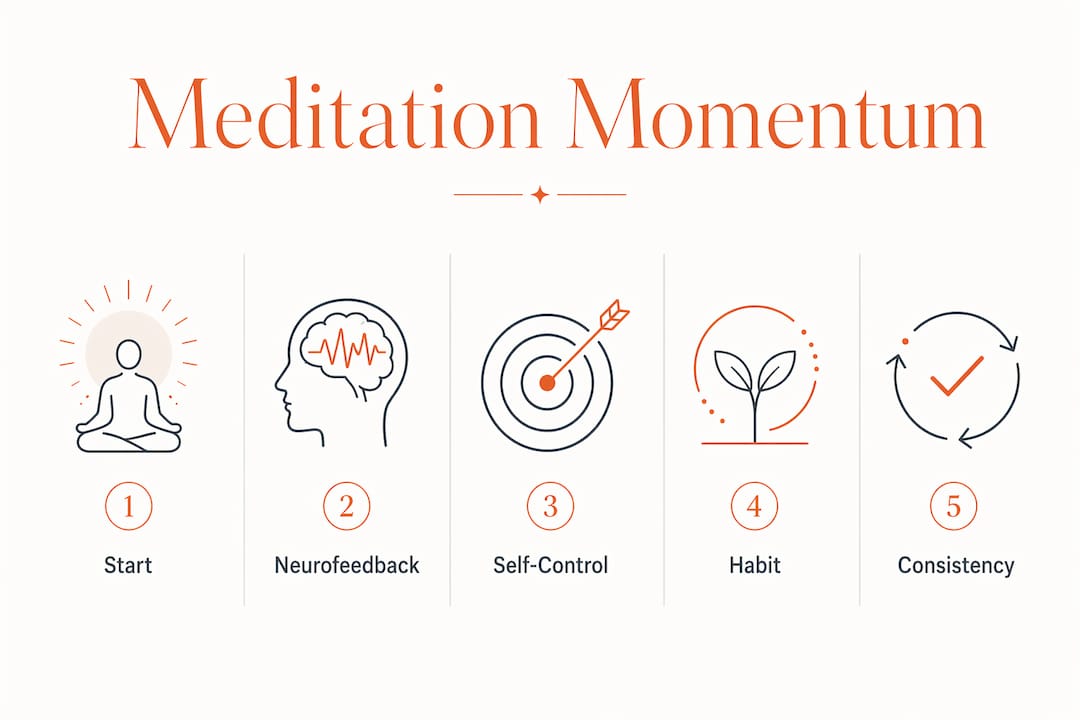
The behavioral evidence backs this up. A randomized controlled trial with 90 participants found that daily 10-minute mindfulness over 21 days significantly improved self-control in food-related decisions. Better self-control in one area tends to generalize. When you notice yourself making cleaner choices at lunch or staying calmer in a difficult conversation, you start connecting those wins back to your practice. That connection is self-efficacy in action, and self-efficacy is the engine of intrinsic motivation.
Mindful micro-practices extend this effect beyond your formal sessions. Small mindful acts throughout the day, like a single conscious breath before a meeting or a 30-second body scan before eating, reinforce the skills you build on the cushion. They keep the nervous system calibrated and prevent the gap between practice and real life from widening.
Here’s what consistent daily practice actually builds over time:
- Self-regulation: You respond to stress rather than react to it, which reduces energy drain from emotional firefighting.
- Decision clarity: Reduced mental noise means fewer decisions made from anxiety or habit rather than intention.
- Identity reinforcement: Each completed session adds to the belief that you are someone who meditates, which makes skipping feel out of character.
- Behavioral spillover: Improved self-control from meditation tends to improve sleep, nutrition, and exercise habits in parallel.
“Momentum matters more than motivation. Motivation is a feeling that comes and goes. Momentum is a system that keeps moving.” — Psychology Today
What habit design principles actually make meditation stick?
Less than 40% of scheduled mindfulness sessions are completed in typical home practice programs. That number isn’t a reflection of weak character. It’s a design failure. Most people try to build meditation habits through willpower and scheduling alone, which collapses the moment life gets complicated.
BJ Fogg’s Tiny Habits method solves this with a different premise. Habits anchored to existing routines and kept small enough to take under 30 seconds dramatically increase long-term adherence. The logic is counterintuitive but solid. A 2-minute meditation you actually do beats a 20-minute session you keep postponing. Resistance is the enemy of momentum, and tiny habits eliminate resistance at the source.
Here’s how to apply this to your meditation practice:
- Choose an anchor. Pick an existing daily behavior, like brewing coffee, brushing your teeth, or sitting down at your desk. Your meditation happens immediately after that cue, every time.
- Start absurdly small. Your first week’s sessions can be 2 minutes. The goal isn’t depth. It’s the identity signal of showing up.
- Celebrate immediately. After each session, do something that feels like a genuine win. A fist pump, a quiet “yes,” or even just a smile. This triggers a small dopamine release that wires the behavior in faster.
- Stack context-specific sessions. A morning energy meditation before work hits differently than a wind-down session at night. Matching the practice to the moment increases relevance and adherence.
- Plan your recovery day in advance. Decide now what you’ll do if you miss a session. Recovery planning removes the identity threat of a missed day and makes restarting automatic rather than effortful.
Pro Tip: Write your anchor cue on a sticky note and put it where you’ll see it. “After I pour my coffee, I meditate for 2 minutes.” Specificity is what separates intentions from habits.
What practical steps and tools support daily meditation momentum?
Knowing the science is one thing. Building the actual system is another. The most effective approach combines session length targeting, digital scaffolding, and flexible recovery built into the plan from day one.
Session length. Target 7 to 10 minutes per session once you’re past the first week. This window reliably reaches the neurological benefit peak identified in EEG research, giving you the internal feedback that reinforces next-day motivation. Shorter sessions still count, especially on hard days. But 7 minutes is your sweet spot for building real momentum.
Digital scaffolding. Apps, timers, and reminder systems reduce the cognitive load of maintaining a habit. A daily habit checklist keeps your practice visible alongside other routines, which prevents it from disappearing into the background. Self-care reminder tools like those at Remoe can prompt you at the right moment without requiring willpower to remember.
Context-specific sessions. Generic meditations lose relevance fast. Matching your session to your actual situation, whether that’s pre-meeting anxiety, post-workout recovery, or low-energy afternoons, keeps the practice feeling useful rather than obligatory. Mosaiic’s approach of generating sessions based on what’s draining your energy that day is one example of how context-specific meditations increase stickiness.
| Approach | Best for | Limitation |
|---|---|---|
| Fixed daily timer | Building initial consistency | Can feel mechanical over time |
| App-guided sessions | Beginners needing structure | Dependency on external cues |
| Context-specific sessions | Sustained long-term engagement | Requires more self-awareness |
| Micro-practice integration | Bridging formal and daily life | Needs habit design to stick |
Flexible recovery. Reducing the minimum viable dose during difficult weeks, a 2-minute breath focus instead of a full session, keeps your streak alive without demanding peak performance every day. Momentum survives imperfection. It doesn’t survive all-or-nothing thinking.
Key takeaways
Daily meditation builds momentum through rapid neurological feedback, improved self-control, and habit design that removes resistance rather than relying on willpower.
| Point | Details |
|---|---|
| Early brain changes drive motivation | EEG effects peak at 7 minutes, giving you fast internal feedback that reinforces the habit. |
| Self-control compounds over time | 21 days of daily mindfulness measurably improves decision-making and behavioral self-regulation. |
| Tiny habits beat ambitious plans | Starting under 30 seconds, anchored to existing cues, produces higher long-term adherence than willpower-based approaches. |
| Recovery planning protects momentum | Pre-deciding how to restart after a missed session prevents identity breaks and keeps progress intact. |
| Context-specific practice increases stickiness | Matching sessions to your actual daily situation makes meditation feel useful, not obligatory. |
Why momentum beats motivation every time
I’ve watched people build meditation practices and abandon them more times than I can count, and the pattern is always the same. They start motivated, hit a rough week, miss three days, and decide they’re “not a meditation person.” The problem was never their character. It was their design.
What I’ve found actually works is treating the first seven days not as a test of discipline but as a momentum-gathering phase. You’re not trying to meditate perfectly. You’re trying to collect evidence that you can do this. Two minutes counts. A distracted session counts. Showing up on a bad day counts more than a perfect session on a good one.
The science on evolving your practice daily supports this. Static routines plateau. When your sessions respond to what’s actually happening in your life, the practice stays alive. That’s where the ripple effect starts. Better focus bleeds into better work. Calmer mornings change how you handle the first difficult conversation of the day. You don’t decide to improve your life. You just keep meditating, and the improvement follows.
The uncomfortable truth is that most meditation advice focuses on technique when the real leverage is in the system around the technique. Get the anchor right, keep the dose small, celebrate the wins, and plan the recovery. The brain will do the rest.
— Giorgio
Start building your momentum with Mosaiic
If you’ve tried meditation before and lost the thread, the issue probably wasn’t the practice. It was the lack of a system that adapted to your actual life.

Mosaiic generates a personalized 5-minute guided session every day based on what’s draining your energy right now. Burned out? Unmotivated? Coming off a rough stretch? You describe it, and Mosaiic writes and narrates a session specific to that context. Each day builds on the last, so your practice evolves with you rather than repeating the same script. The goal isn’t calm. It’s energy. Start your first session free and see what a practice designed around your momentum actually feels like.
FAQ
How quickly does meditation produce noticeable effects?
Measurable neurophysiological changes begin within 2 to 3 minutes of practice and peak around 7 minutes, according to EEG research with 103 participants. Most people notice a shift in alertness and mental clarity within the first week of daily sessions.
How long should a daily meditation session be for building momentum?
Seven to ten minutes is the optimal target. EEG data shows brainwave reorganization peaks at around 7 minutes, which provides the internal feedback that reinforces next-day motivation and supports consistent habit formation.
What is the best way to start a daily meditation habit?
BJ Fogg’s Tiny Habits method recommends anchoring your session to an existing daily routine and starting with under 30 seconds to minimize resistance. Celebrating immediately after each session triggers dopamine reinforcement that wires the behavior in faster.
Does missing a day of meditation break your momentum?
Not if you plan for it in advance. Treating the first week as a momentum-building phase and pre-deciding how to restart after a missed session prevents the identity break that causes most people to quit entirely.
Can daily meditation improve more than just stress levels?
A 21-day randomized controlled trial found that daily 10-minute mindfulness significantly improved self-control and health-related decision-making. Behavioral spillover from meditation regularly extends to sleep, nutrition, and focus, not just stress reduction.