Morning Meditation Energy Activation: Your Daily Ritual
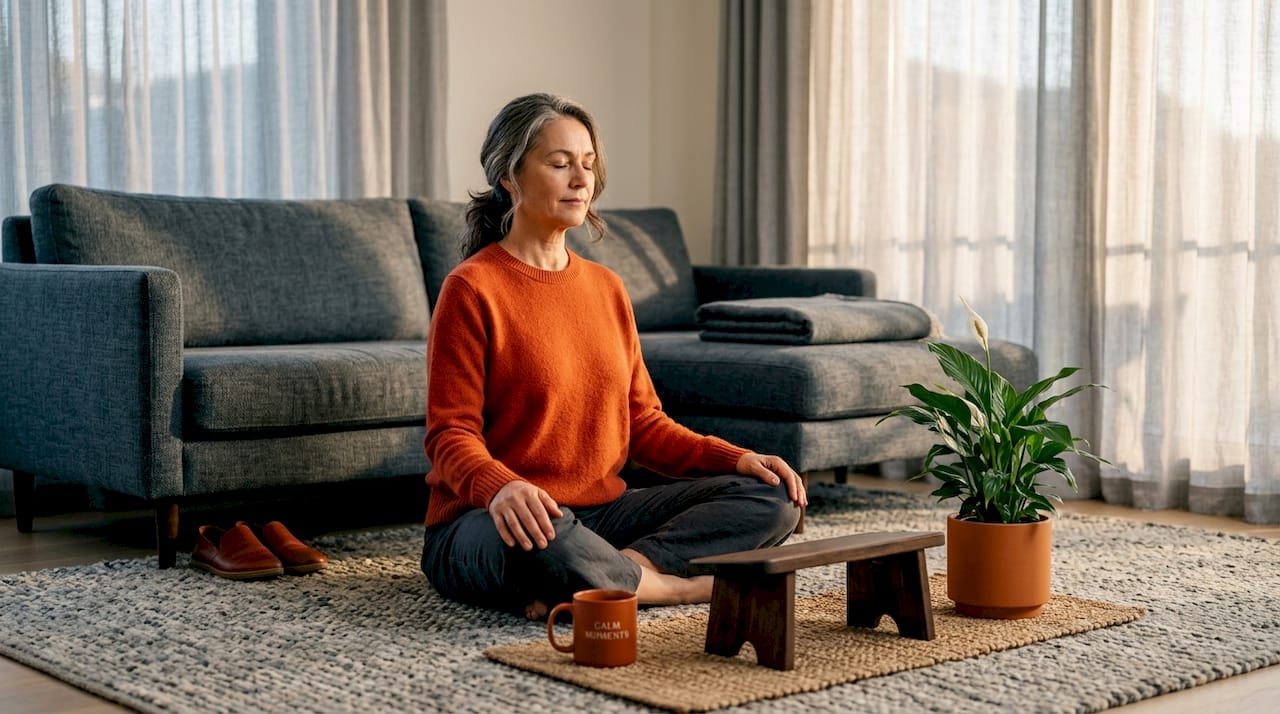
Morning meditation energy activation is the practice of using specific breathing frequencies and sensory grounding techniques to shift your nervous system toward calm alertness before the demands of the day begin. This is not about forcing a mood or manufacturing enthusiasm. It is nervous system modulation: a deliberate, evidence-based method for arriving at your first meeting, workout, or creative task already steady and clear. Research from PubMed confirms that slow-paced breathing reduces perceived stress within minutes, and UMass Memorial Health identifies brief morning mindfulness pauses as one of the most effective ways to set a stable tone for the hours ahead. Five minutes is enough to start.
What is morning meditation energy activation?
Morning meditation energy activation is best understood as a nervous system state-setting protocol, not a mood trick. The standard clinical term for the underlying mechanism is autonomic nervous system modulation, and slow-paced breathing (SPB) is its most accessible pathway. When you breathe at roughly 0.12 Hz (about five to six breath cycles per minute), you directly increase heart rate variability, which is the measurable sign that your parasympathetic nervous system is engaged. That engagement produces calm alertness: focused, steady, and free of the cortisol spike that a rushed morning generates.
A study of 67 students using micro-randomized prompts found that five-minute SPB sessions lowered perceived stress immediately compared to controls over four days. That is a short window for a meaningful physiological shift. The implication is direct: you do not need a 30-minute session to move the needle. You need the right technique, applied consistently, at the right time of day.

How to set up for an energizing morning meditation
The environment you create in the first five minutes after waking shapes everything that follows. Morning sunlight exposure within 30 to 60 minutes triggers your master circadian clock, reinforcing the cortisol rhythm that naturally peaks in the morning and supports energy and cognitive focus. Pairing light exposure with your meditation practice compounds both effects.
What you need (essentials):
- A quiet space where you will not be interrupted for 5 to 10 minutes
- A timer or a guided meditation app (Mosaiic, for example, generates a personalized 5-minute session based on what is draining you that day)
- A chair or yoga mat, whichever keeps your spine upright without effort
- Natural light or a window, if available
Optional additions:
- A light blanket if you tend to feel cold when still
- A journal for one sentence of intention after the session
- Gentle movement (three to five neck rolls or shoulder circles) before sitting
The single biggest setup mistake is meditating while still horizontal in bed. Your brain associates that position with sleep, and you will fight drowsiness instead of activating clarity. Sit upright from the start.
Pro Tip: Start with exactly five minutes for the first two weeks. Adherence drops sharply when beginners aim for 20-minute sessions. Five minutes practiced daily outperforms 20 minutes practiced twice a week.
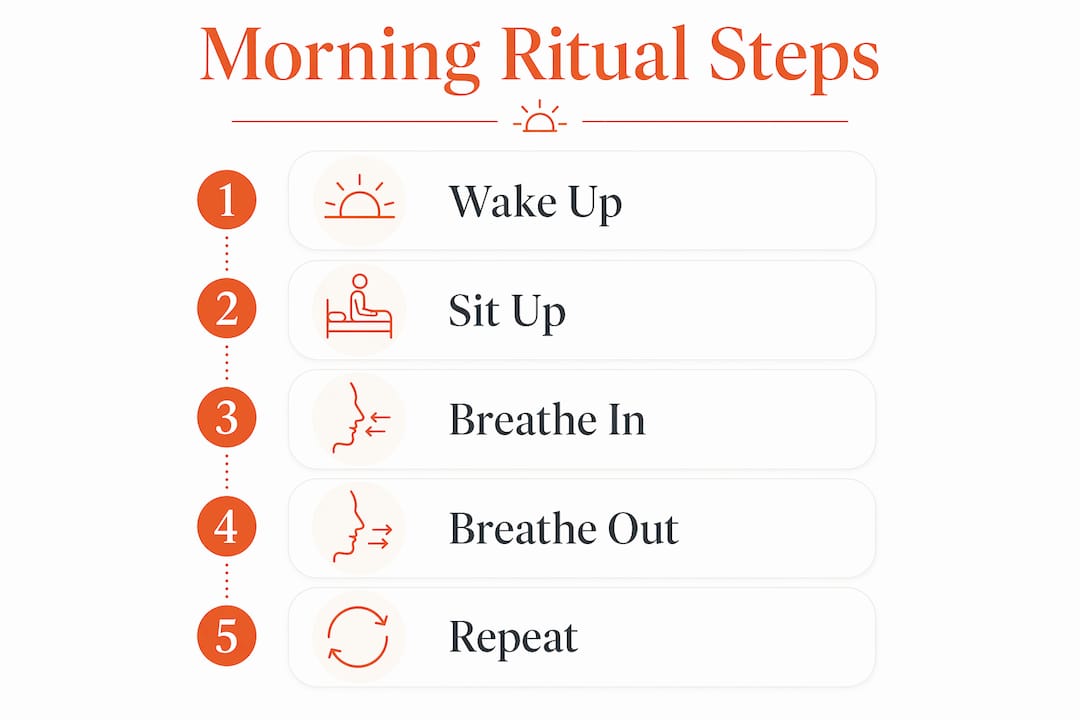
How to perform slow breathing and grounding to activate energy
This is the core of the practice. Follow these steps in order. Each one builds on the last, and skipping the grounding phase is the most common reason people feel restless rather than energized.
-
Ground through your senses first. Before closing your eyes, name five things you can see, four you can feel (the chair, your feet on the floor, the temperature of the air, the weight of your hands), three you can hear, two you can smell, and one you can taste. This 60-second scan pulls your attention fully into the present moment and out of the planning loop your brain defaults to on waking.
-
Set your breathing rhythm. Inhale through your nose for four counts, then exhale through your mouth or nose for six counts. That ratio produces approximately 0.12 Hz, the frequency at which heart rate variability increases most reliably. The exhale is longer than the inhale by design. A longer exhale activates the vagus nerve more strongly than the inhale does, which is the direct mechanism behind the calm alertness you are building.
-
Sustain for five minutes. Keep your attention on the physical sensation of breath: the rise of your chest, the slight pause at the top, the release. When your mind wanders (and it will), return to the count without judgment. Each return is the practice working, not failing.
-
Optional: add toning. On your exhale, produce a low, steady hum or an extended “mmm” sound. EEG research shows that vocalized toning boosts alpha and theta brain wave activity beyond breathing alone, deepening the meditative state. This is particularly useful if you find silent breathing hard to sustain.
-
Close with one deliberate breath. Take one full inhale, hold for two counts, and release completely. Open your eyes slowly. Sit for 10 seconds before standing.
Technique comparison: which approach fits your morning?
| Technique | Best for | Nervous system effect |
|---|---|---|
| Slow breathing only | Beginners, quiet environments | Reliable HRV increase, calm alertness |
| Breathing with toning | Those who find silence hard to hold | Alpha/theta wave increase, deeper calm |
| Breathing with sensory grounding | Anxious or scattered mornings | Fastest grounding, reduces mental chatter |
| Combined (grounding + breathing + toning) | Experienced practitioners | Strongest autonomic shift, most meditative |
Pro Tip: Prioritize the exhale. If you can only remember one thing from this guide, make it this: a longer exhale than inhale is the single most reliable lever for calm alertness without agitation.
Common challenges and how to troubleshoot them
Most people who abandon a morning energy routine do so in the first two weeks, and almost always for one of four reasons.
Feeling restless instead of calm. This usually means the session started with breathing before grounding. The sensory scan in step one is not optional. It is the on-ramp. Skipping it and jumping straight to breath work is like trying to merge onto a highway from a standstill. Grounding-first progressions keep sessions clear and prevent the overwhelm that comes from chasing high-vibration energy too fast.
Losing the breathing count. This is normal and not a sign of failure. Use a free metronome app set to 10 beats per minute, or follow a guided session that cues your inhale and exhale. Mosaiic’s daily sessions narrate the breathing rhythm so you never have to track the count yourself.
Inconsistent practice. Motivation is unreliable. Habit anchors are not. Attach your meditation to an existing morning behavior: right after your alarm goes off, right after brushing your teeth, or right before your first coffee. The anchor behavior triggers the meditation automatically, removing the decision entirely.
Mistakes to avoid:
- Meditating lying down (promotes sleep, not activation)
- Sessions longer than 10 minutes in the first month (fatigue kills consistency)
- Checking your phone before meditating (cortisol spike from notifications disrupts the nervous system state you are trying to build)
- Expecting to feel dramatically different after one session (stress reduction is measurable within minutes, but focus and vitality improvements require weeks of consistency)
Pro Tip: If you miss a day, do not double up the next morning. Just return to your standard session. Doubling up creates pressure that makes the practice feel like a chore.
How to build a sustainable morning energy routine
The most durable morning mindfulness practice is one you barely notice you are doing. UMass Memorial Health describes this as small-threshold pauses: brief sensory moments woven into transitions you already make. The goal is not to add a meditation block to your calendar. It is to make the practice invisible by attaching it to existing structure.
Timing matters more than duration. A 5-minute session practiced within 30 minutes of waking produces stronger circadian alignment than the same session done at noon. Your nervous system is most receptive to state-setting in the first hour after sleep, when cortisol is naturally rising and your brain is moving from theta to alpha wave dominance.
Expect a clear progression of benefits as consistency builds. The table below reflects what the research supports across a realistic timeline.
| Timeframe | Expected benefit | What drives it |
|---|---|---|
| Day 1 to 7 | Reduced perceived stress within sessions | Immediate parasympathetic activation via SPB |
| Week 2 to 4 | Improved focus and reduced morning anxiety | Accumulated HRV improvements and habit formation |
| Month 2 onward | Steadier daily energy, better stress regulation | Structural nervous system adaptation over repeated practice |
| Month 3 onward | Increased vitality and reduced reactivity | Long-term vagal tone improvement and attentional control |
The key variable is not session length. It is frequency. Daily practice at five minutes produces better outcomes than three weekly sessions at 20 minutes, because the nervous system responds to repetition more than volume.
Key takeaways
Morning meditation energy activation works because slow-paced breathing at 0.12 Hz directly increases heart rate variability, shifting the nervous system toward calm alertness within minutes and building lasting vitality through daily repetition.
| Point | Details |
|---|---|
| Technique over duration | Five minutes of slow-paced breathing at 0.12 Hz outperforms longer, unfocused sessions every time. |
| Ground before you breathe | Sensory grounding before breath work prevents restlessness and anchors attention in the present. |
| Exhale is the lever | A longer exhale than inhale activates the vagus nerve and produces calm alertness without agitation. |
| Anchor to existing habits | Attaching meditation to a morning behavior you already do removes the decision and builds consistency. |
| Benefits accumulate over weeks | Stress reduction is immediate, but focus and vitality improvements require at least two to four weeks of daily practice. |
What I’ve learned from setting my nervous system before the day does
Most people approach morning meditation looking for a spark. They want to feel switched on, motivated, ready. What they discover, if they stick with it, is something quieter and more useful: steadiness. The day still throws its surprises. The difference is that you meet them from a different baseline.
The mistake I see most often is treating the morning session as a performance. People track how “good” the meditation felt, get frustrated when their mind wandered, and quit within two weeks. The practice is not about the quality of any single session. It is about the cumulative effect of showing up. A distracted five-minute session still moves your HRV. It still signals to your nervous system that this is how the day begins.
I also think the emphasis on “energy” in morning meditation is sometimes misleading. What you are actually building is capacity: the ability to stay clear under pressure, to recover faster from stress, to make decisions without the fog that a reactive morning creates. That is more valuable than any caffeine-style surge, and it does not crash at 2 p.m.
Start smaller than you think you need to. Stay longer than you think you should. The results will not announce themselves dramatically. One day you will notice that you handled something difficult without bracing, and you will understand what the practice has been doing all along.
— Giorgio
Start your morning with Mosaiic
If you want a guided morning meditation that adapts to what you are actually dealing with, not a generic relaxation track, Mosaiic is built for exactly that.

Mosaiic generates a personalized 5-minute session each morning based on what is draining your energy that day. You describe your situation, and the app writes and narrates a session specific to your context. Each session builds on the last, so the practice evolves as you do. The positioning is deliberate: energy, not just calm. You finish a Mosaiic session feeling fuller, not sleepier. Free sample sessions are available, with Starter and Daily tiers for those who want a full daily practice. Start your first session and see what a morning routine built around your actual life feels like.
FAQ
What is morning meditation energy activation?
Morning meditation energy activation is the practice of using slow-paced breathing and sensory grounding techniques to shift your nervous system toward calm alertness at the start of the day. The clinical mechanism is autonomic nervous system modulation, specifically increasing heart rate variability through controlled breathing at approximately 0.12 Hz.
How long does it take to feel the benefits?
Stress reduction is measurable within a single five-minute session of slow-paced breathing. Focus and vitality improvements typically become consistent after two to four weeks of daily practice, as the nervous system adapts through repetition.
What breathing pattern works best for morning energy?
Inhale for four counts and exhale for six counts, repeated for five minutes. This ratio produces the 0.12 Hz frequency that research identifies as most effective for increasing heart rate variability and producing calm alertness without agitation.
Can I do this without a guided app?
Yes. A timer and a metronome app set to 10 beats per minute are enough to maintain the breathing rhythm independently. That said, a guided session removes the cognitive load of tracking the count, which makes it easier to sustain attention on the breath itself.
Why do I feel restless instead of energized after meditating?
Restlessness during morning meditation usually means the session started with breathing before sensory grounding. Complete the five-senses grounding scan first, then begin the breathing sequence. This on-ramp prevents the nervous system agitation that comes from jumping straight into breath work on a still-activated morning brain.
Recommended
Article was at least partially generated or improved with ai.