7 Examples of Energy-Focused Meditations for Vitality
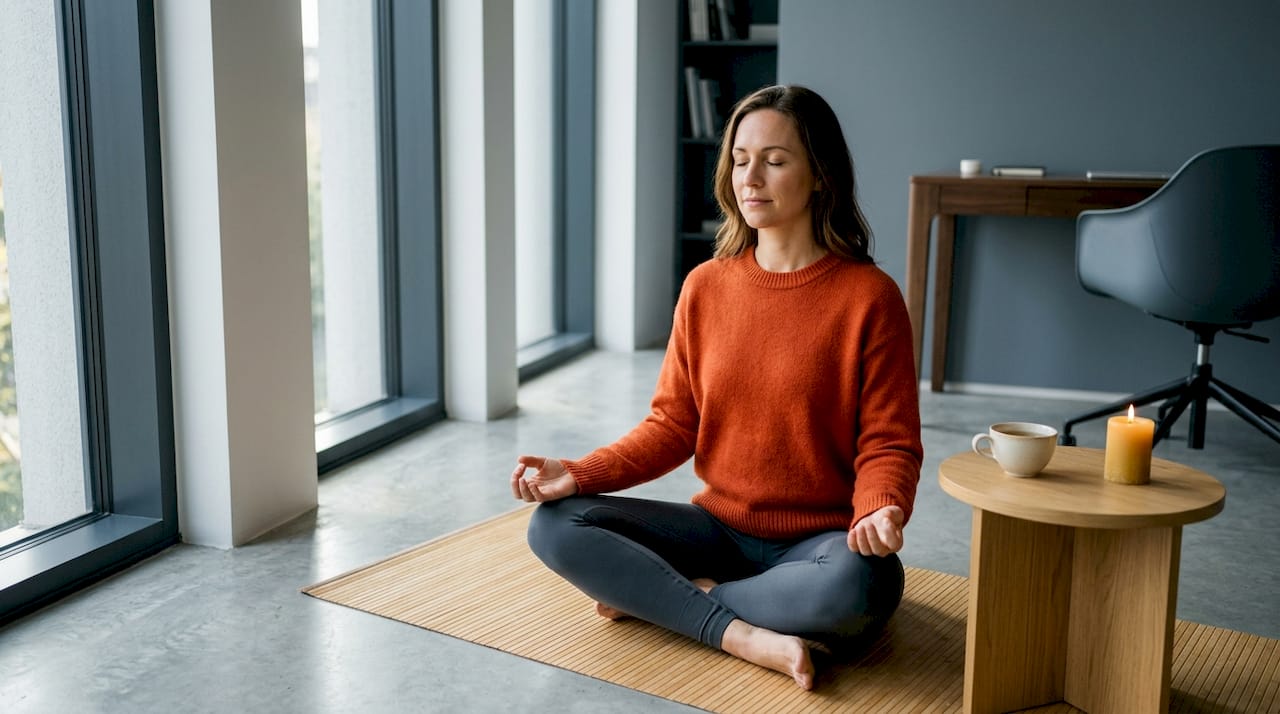
Energy-focused meditation is defined as a breath- and body-centered practice designed to shift your autonomic state, reduce fatigue, and build sustainable vitality through intentional breathing, visualization, and sound. Unlike relaxation-only approaches, these techniques are built to leave you fuller, not sleepier. The best examples of energy-focused meditations draw on mechanisms like autonomic modulation through breath timing, chakra-based sound work, and somatic body awareness. Each method is brief enough to fit a real schedule and specific enough to produce measurable results.
1. The Heart-Light Practice: a simple energy-raising meditation
The Heart-Light Practice is a breath-and-visualization technique that uses a 4-second inhale and a 4-second exhale while focusing attention on a warm gold light expanding from the heart area. Jake Ducey, who developed and documented this practice, recommends just 5 to 10 minutes daily over 7 days to notice consistent shifts in energy and mood. The simplicity of the breath pacing makes it accessible even on your most depleted days.
Here is how to practice it:
- Sit comfortably with your spine upright and your eyes closed.
- Place one hand on your chest, over your heart.
- Inhale slowly for 4 seconds, imagining warm gold light gathering at your heart center.
- Exhale slowly for 4 seconds, visualizing that light expanding outward through your chest and body.
- Repeat for 5 to 10 minutes, keeping your attention anchored to the heart area.
The most common obstacle is expecting vivid imagery. Research confirms that visualization intensity matters less than consistent breath timing and clear intention. If the gold light feels abstract, simply intend it to be there. That intention, paired with steady breath cycles, is what produces the physiological shift.
Pro Tip: If your mind wanders during the Heart-Light Practice, return to counting your breath rather than chasing the image. The breath cycle is the anchor; the visualization is the amplifier.
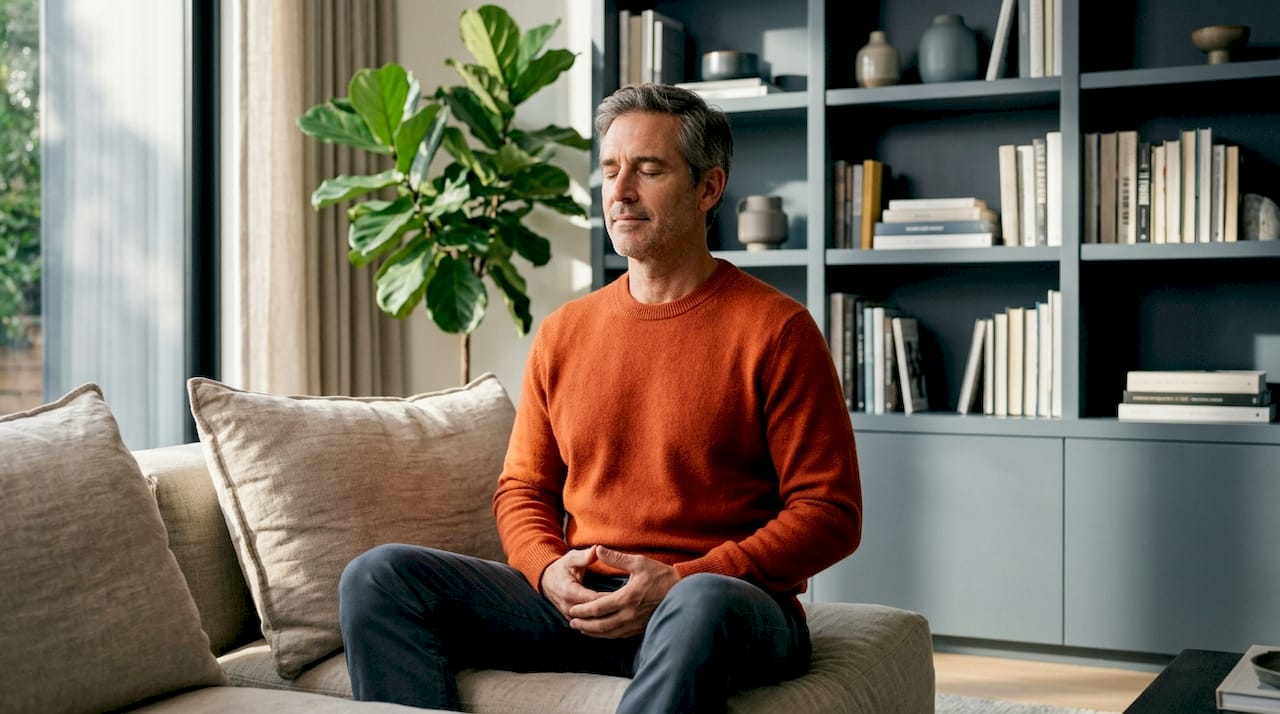
2. Jing Qi ‘energy snacks’: micro-practices for quick boosts
Jing Qi energy snacks are short, lower-abdomen-focused meditations practiced in bursts of 6 to 12 breaths, repeated three times daily over five days. Developed within the Taoist tradition and documented by meditation teacher Toby Ouvry, this approach treats energy building the way athletes treat interval training: frequent short sessions outperform rare long ones. The lower abdomen, known in Chinese medicine as the lower Dan Tian, is considered the body’s primary reservoir of foundational energy.
To practice a Jing Qi energy snack:
- Sit or stand with your spine aligned and your shoulders relaxed.
- Place both hands flat on your lower abdomen, just below your navel.
- Inhale slowly through your nose, letting your belly expand fully into your hands.
- Exhale gently, drawing your belly inward and slightly upward.
- Complete 6 to 12 full breath cycles, keeping your attention on the warmth building under your hands.
The repeated short sessions model works because it keeps your nervous system engaged without demanding large blocks of time. Three brief sessions spread across a day accumulate more energetic benefit than one 30-minute session squeezed in on weekends.
Pro Tip: Set three phone alarms labeled “energy snack” at morning, midday, and late afternoon. Treating these as non-negotiable appointments is what separates people who feel the results from those who forget to practice.
3. Chakra meditation: a 21-minute journey through energy centers
Chakra meditation is a structured practice that travels through the body’s seven main energy centers, from the base of the spine to the crown of the head, using mantras and breath to cleanse and activate each one. The 21-minute guided format developed by davidji assigns specific seed mantras to each chakra, including LAAM for the root, VAAM for the sacral, and RAAM for the solar plexus. Each mantra is chosen for its vibrational frequency, which is believed to resonate with the corresponding energy center.
The seven chakras and their associated mantras are:
- Root (tailbone): LAAM. Grounds physical energy and stability.
- Sacral (lower abdomen): VAAM. Activates creativity and emotional flow.
- Solar Plexus (upper abdomen): RAAM. Builds personal power and motivation.
- Heart (center of chest): YAAM. Opens compassion and connection.
- Throat (base of neck): HAAM. Supports clear expression and communication.
- Third Eye (between eyebrows): SHAM. Sharpens intuition and mental clarity.
- Crown (top of head): OM. Connects to broader awareness and presence.
| Chakra | Location | Mantra | Primary effect |
|---|---|---|---|
| Root | Tailbone | LAAM | Grounding and physical stability |
| Sacral | Lower abdomen | VAAM | Creativity and emotional balance |
| Solar Plexus | Upper abdomen | RAAM | Motivation and personal power |
| Heart | Chest center | YAAM | Compassion and openness |
| Crown | Top of head | OM | Expanded awareness |
The 21-minute duration is intentional. Moving too quickly through each chakra produces a surface-level scan rather than genuine energetic clearing. Spending roughly 3 minutes per center, with sustained mantra repetition and breath awareness, creates the depth needed for the practice to shift how you feel.
4. Resonance paced breathing: the science-backed energy technique
Resonance paced breathing (RPB) is a specific breathing protocol practiced at exactly six breaths per minute, which targets the cardiovascular system’s baroreflex resonance frequency at approximately 0.1 Hz. A 2026 study with 147 participants found that RPB increases functional connectivity in central autonomic network regions, including the insula, a brain area central to body awareness and energy regulation. That finding matters because it means RPB does not just feel calming. It measurably changes how your brain and heart communicate.
Key guidelines for practicing RPB:
- Inhale for 5 seconds, exhale for 5 seconds. This produces exactly 6 breath cycles per minute.
- Keep your breath smooth and continuous, with no pause between inhale and exhale.
- Practice for a minimum of 10 minutes to allow the baroreflex system to entrain to the 0.1 Hz rhythm.
- Use a metronome app or a pacer audio track to maintain precise timing, especially when starting out.
- Sit upright with your hands resting on your thighs to keep the chest open.
The autonomic regulation effect of RPB reduces both anxiety and fatigue by shifting the nervous system toward a state of alert calm rather than drowsy relaxation. This is what separates RPB from generic deep breathing: the exact tempo is the mechanism, not just a preference.
5. Nasal phonation and humming: sound as an energy activator
Nasal phonation, the practice of sustained humming or nasal sound production during meditation, is one of the most underused and scientifically supported energy meditation techniques available. A 2026 meta-analysis of 23 clinical trials involving 1,247 participants found that phonation-based practices significantly enhance vagal tone, measured through heart rate variability, and reduce cortisol levels. Higher vagal tone means your nervous system recovers from stress faster and sustains energy more efficiently.
The mechanism is direct. Humming activates the vagus nerve through nasal phonemes, creating a bioacoustic pathway that bypasses the need for complex visualization or breath counting. You simply hum, and your body responds.
“Phonation activates vagal pathways via nasal phonemes, offering a bioacoustic mechanism that explains why humming and chanting improve autonomic regulation.” — from the S-CN Model meta-analysis, 2026
To practice nasal phonation meditation, sit comfortably, close your mouth, and produce a steady hum on your exhale. Feel the vibration in your nasal cavity, your chest, and your skull. Sustain each hum for the full length of your exhale, then inhale quietly through your nose. Ten minutes of this practice produces measurable shifts in heart rate variability.
Pro Tip: Experiment with pitch. Lower pitches tend to produce stronger chest and abdominal vibration, while higher pitches resonate more in the skull and sinuses. Match the pitch to where you feel most fatigued: chest tightness responds well to low tones, mental fog to higher ones.
6. Comparing energy meditation techniques: which one fits your day?
Choosing the right technique depends on your available time, your current energy deficit, and your comfort with visualization versus breath work versus sound. The table below maps each practice to its core use case.
| Technique | Duration | Best for | Complexity |
|---|---|---|---|
| Heart-Light Practice | 5 to 10 min | Morning energy priming | Low |
| Jing Qi energy snacks | 2 to 3 min x3 | Midday fatigue recovery | Very low |
| Chakra meditation | 21 min | Deep energetic reset | Moderate |
| Resonance paced breathing | 10 to 20 min | Anxiety-driven fatigue | Low to moderate |
| Nasal phonation | 10 min | Stress-related energy drain | Very low |
The pattern that emerges from this comparison is clear. When time is short and fatigue is moderate, Jing Qi energy snacks and nasal phonation deliver the fastest return. When you have 20 minutes and need a full reset, chakra meditation or resonance paced breathing produces deeper results. For a daily energy ritual, the Heart-Light Practice is the most sustainable starting point because its structure is simple enough to repeat without guidance after the first few sessions.
No single technique works best for every person or every day. The most effective approach is to treat these practices as a personal toolkit and rotate based on what your body signals it needs. Readers who want to explore context-specific meditation examples will find that matching technique to situation consistently outperforms picking one method and forcing it every day.
Key takeaways
Energy-focused meditation works because breath timing, sound, and body awareness each target the autonomic nervous system through distinct but complementary pathways, making short daily practice more effective than occasional long sessions.
| Point | Details |
|---|---|
| Breath tempo is the mechanism | Resonance paced breathing at 6 breaths per minute produces measurable brain-heart connectivity changes. |
| Short sessions beat long ones | Jing Qi energy snacks practiced 3 times daily outperform single long sessions for fatigue relief. |
| Sound activates the vagus nerve | Nasal humming improves heart rate variability and lowers cortisol across 23 clinical trials. |
| Intention matters more than imagery | Consistent breath timing with clear intention produces physiological benefits even without vivid visualization. |
| Match technique to your day | Use quick practices for midday recovery and longer formats for deep morning or evening resets. |
What I’ve learned from actually doing these practices every day
I spent the better part of three months rotating through every technique in this article, and the finding that surprised me most was how little visualization quality mattered. I expected the Heart-Light Practice to feel hollow when I couldn’t conjure a clear image. It didn’t. The breath pacing did the work regardless, which aligns with what the research confirms: intention and breath consistency are the active ingredients, not the vividness of what you imagine.
The Jing Qi energy snacks were the hardest habit to build and the most rewarding once I did. Three sessions a day sounds like nothing until you realize you’ve been skipping the midday one for two weeks straight. The fix was treating each session as a meeting I couldn’t reschedule. Once that mental shift happened, the cumulative effect became obvious within a few days.
My honest recommendation: start with nasal phonation if you’re skeptical or time-pressed. It requires no visualization, no breath counting, and no prior experience. You hum for 10 minutes and your nervous system responds. That early win builds the motivation to try the more structured practices. The goal of evolving your meditation practice over time is not about adding complexity. It’s about finding what your body responds to and doing more of that.
— Giorgio
How Mosaiic helps you practice energy meditation daily
Fatigue is specific. A rough week at work drains you differently than a bad night of sleep or a stretch of low motivation. Mosaiic is built around that reality.

Mosaiic generates a personalized 5-minute guided meditation each day based on what you describe as your current situation. Burned out, unmotivated, or just running on empty, the app writes and narrates a session built for exactly that context. Each session builds on the last, so your practice evolves as you do. The positioning is deliberate: energy, not just calm. If you want a guided daily practice that leaves you fuller rather than sleepier, Mosaiic is built for that. Free sessions are available to start, with Starter and Daily tiers for deeper personalization.
FAQ
What is energy-focused meditation?
Energy-focused meditation is a breath- and body-centered practice that uses intentional breathing, visualization, or sound to shift the autonomic nervous system toward a state of alert vitality rather than drowsy relaxation.
How long should an energy meditation session be?
Session length depends on the technique. Jing Qi energy snacks require only 2 to 3 minutes per session, while resonance paced breathing and chakra meditation are most effective at 10 to 21 minutes respectively.
Does visualization have to be vivid to work?
No. Research on the Heart-Light Practice confirms that consistent breath timing and clear intention produce physiological benefits even when the mental image is weak or abstract.
What is the fastest energy meditation technique?
Nasal phonation and Jing Qi energy snacks are the fastest options. Both require no setup, no prior experience, and produce measurable autonomic effects in under 5 minutes per session.
How often should I practice energy meditations?
Daily practice produces the most consistent results. Short sessions repeated three times daily, as in the Jing Qi model, outperform longer sessions practiced only a few times per week for combating fatigue.