Dynamic Meditation Programming: What It Is and Why It Works

Dynamic meditation programming is a structured, five-stage active meditation method that uses physical intensity to clear mental clutter and restore energy. Developed by Osho, it runs 60 minutes and moves through chaotic breathing, emotional catharsis, mantra-based jumping, deep stillness, and celebratory dance. Unlike passive sitting practices, it treats the body as the entry point to the mind. Research shows participants experience cortisol reduction of 28.6% over 21 days. If you feel drained, restless, or stuck in your practice, this method was built for exactly that state.
What is dynamic meditation programming and how does it work?
Dynamic meditation programming is the formal term for what practitioners and researchers call Osho Dynamic Meditation. It is a sequenced, timed practice where each stage has a specific physiological and psychological purpose. The structure is not arbitrary. Each stage builds on the last, moving you from physical exhaustion into genuine inner silence.
The five-stage sequence is scientifically validated for reducing emotional exhaustion and anxiety within one week. That speed of effect is unusual for meditation practices, and it comes directly from the method’s physical intensity.
The five stages explained
-
Chaotic breathing (10 minutes). You breathe rapidly and deeply through the nose with no rhythm or pattern. The goal is to build internal energy and heat. This stage disrupts habitual mental patterns by flooding the body with oxygen and activating the sympathetic nervous system.
-
Catharsis (10 minutes). You express whatever arises: crying, laughing, shaking, screaming, or moving. Nothing is suppressed. This stage targets stored emotional tension. Facial muscle tension is often the primary site of suppression, so consciously cycling contractions and releases in the face deepens the emotional release.
-
Jumping with mantra (10 minutes). You jump repeatedly with arms raised, landing flat-footed and chanting “Hoo” with each landing. The sound drives energy upward through the body. This stage bridges the cathartic release with the stillness that follows.
-
Stillness (15 minutes). You stop completely, in whatever position you land, and hold absolute stillness. No adjusting, no scratching, no fidgeting. This is the core of the practice. The physical exhaustion from the first three stages makes genuine inner silence accessible in a way that sitting quietly never could.
-
Celebratory dance (15 minutes). You move freely to music as an expression of gratitude and joy. This stage integrates the experience and grounds the energy released during catharsis.
Pro Tip: During stage two, do not perform emotions. Let the body lead. If nothing arises, shake your hands or face until something genuine surfaces. The difference between acting and releasing is felt, not faked.
What physiological and psychological benefits come from dynamic meditation?
Dynamic meditation’s physical exertion triggers endorphin release and shifts the nervous system from sympathetic to parasympathetic dominance during the stillness stage. That shift is the mechanism behind the calm you feel afterward. It is not passive relaxation. It is a physiological reset earned through effort.
The benefits extend well beyond a single session. Practitioners report improved sleep and reduced anxious-depressive symptoms with consistent practice. The cortisol reduction of 28.6% over 21 days outpaces results typically reported for passive mindfulness techniques. That gap matters because cortisol is the primary driver of fatigue, brain fog, and emotional reactivity.
| Benefit | Timeframe | Mechanism |
|---|---|---|
| Cortisol reduction | 21 days | Physical exertion plus parasympathetic activation |
| Reduced anxiety and emotional exhaustion | Within 1 week | Cathartic release of suppressed tension |
| Improved sleep quality | Within 1–3 weeks | Nervous system downregulation post-practice |
| Reduced trait-anger and aggression | Within 1 week | Emotional discharge during catharsis stage |
| Increased vitality and mental clarity | 7–21 days | Release of trapped emotional energy |
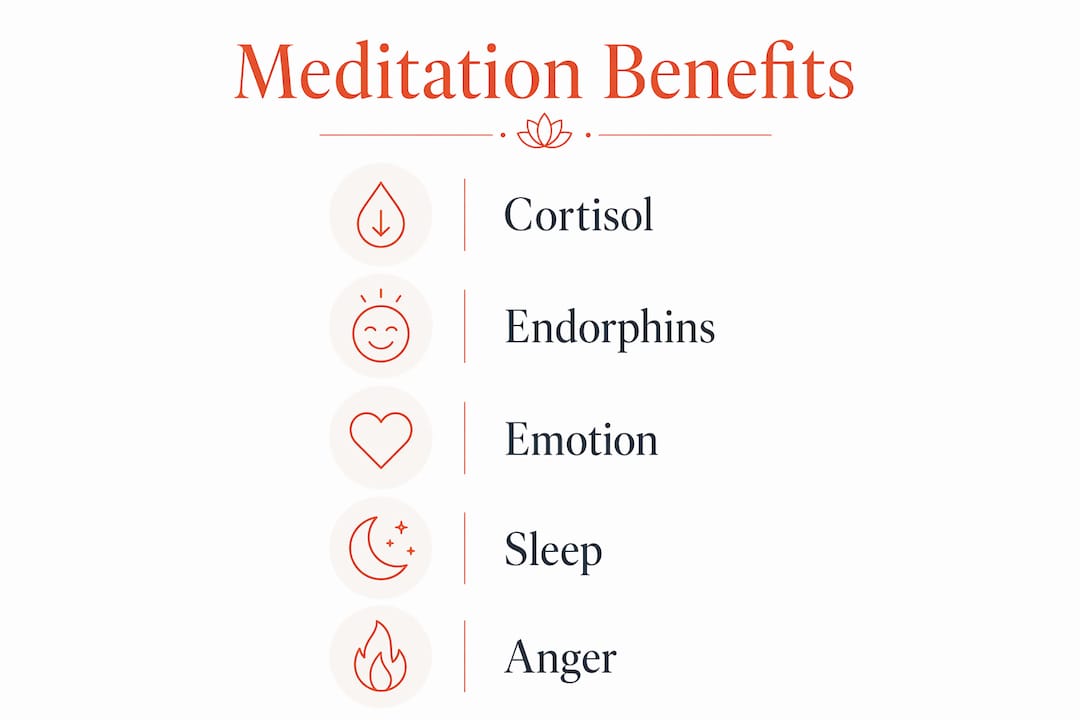
Significant reductions in trait-anger and aggressive behavior appear within one week of consistent practice. That finding is particularly relevant for people who feel irritable or emotionally reactive alongside their fatigue. The practice does not just calm you down. It clears the underlying charge that was driving the reactivity in the first place.
Dynamic meditation also releases trapped emotional energy and makes it available as restored vitality. This is the core of what separates it from relaxation-focused practices. You leave a session with more energy than you started with, not less.
How does dynamic meditation differ from traditional passive meditation?
Traditional passive meditation asks you to sit still and observe your thoughts. For people with calm, focused minds, that works well. For people carrying chronic stress, fatigue, or emotional backlog, it often fails. The reason is structural.
Traditional passive meditation frequently fails for individuals with busy or chaotic minds because it skips the cathartic physical release that prepares the mind for genuine silence. You cannot force stillness onto a nervous system that is still running hot. The body needs to discharge first.
Dynamic meditation uses a concept called dialectical meditation to solve this problem. The idea is direct: true inner stillness requires burning through mental clutter with controlled chaos first. Silence becomes a natural outcome rather than a forced state.
“Dynamic meditation emphasizes ‘not a doing, but a happening.’ The witness observes the body expressing repressed emotions without interference. You are not the actor. You are the one watching the actor.”
This distinction matters practically. People who have tried passive meditation and found it frustrating or ineffective are often the best candidates for dynamic meditation. The restlessness they felt sitting still was not a personal failure. It was the body signaling that it needed to move before it could be quiet.
- Dynamic meditation suits people with high stress loads, emotional suppression, or physical restlessness.
- Passive meditation suits people who already have a relatively quiet baseline and need depth rather than discharge.
- Both practices can coexist. Many practitioners use dynamic meditation in the morning and shorter passive sits in the evening.
- The adaptive meditation approach of matching practice type to current state produces better outcomes than sticking rigidly to one method.
How to practice dynamic meditation programming effectively
The environment you choose directly affects how deeply you can release. A private space is critical because social inhibition blocks full cathartic expression. A room where you can make noise, move freely, and not worry about being observed removes the single biggest barrier to breakthrough in stage two.
Morning practice between 6:00 and 7:00 AM aligns with circadian rhythms and enhances energy integration throughout the day. Practicing at this time means the energy released during catharsis feeds directly into your most productive hours rather than dissipating before sleep.
- Wear loose, comfortable clothing. Tight clothes restrict movement and pull attention to the body during catharsis.
- Use a blindfold during stages one through four. Closing off visual input deepens internal awareness and reduces self-consciousness.
- Practice on an empty stomach. The physical intensity of the first three stages is uncomfortable after eating.
- Start with three sessions per week before moving to daily practice. Your body needs time to acclimate to the intensity.
- Keep a short journal entry after each session. Noting what arose during catharsis helps you track emotional patterns over time.
Witnessing awareness during the chaotic stages is the skill that separates genuine practice from mere physical exertion. You are not trying to feel things. You are watching the body feel things. That observer position is what makes the practice meditative rather than just aerobic.
A silent adaptation exists for situations where vocalization is not possible. During stage two, you focus entirely on intense physical movement rather than sound. This silent catharsis maintains the energetic release mechanism even without audible expression. It is a practical option for apartment living or shared spaces.
Pro Tip: If you find the 60-minute format too intense at first, begin with just the first two stages for two weeks. Building tolerance for the chaotic breathing stage makes the full sequence far more accessible.
Key Takeaways
Dynamic meditation programming works because it uses physical intensity to earn genuine stillness, making it the most effective active meditation method for people carrying chronic stress or emotional fatigue.
| Point | Details |
|---|---|
| Five-stage structure | Each stage builds on the last, moving from chaos to silence to integration. |
| Cortisol reduction | Practitioners report a 28.6% drop in cortisol over 21 days of consistent practice. |
| Witnessing awareness | Observing the body during chaos is what makes the practice meditative, not just physical. |
| Dialectical approach | True stillness requires burning through mental clutter first, not suppressing it. |
| Morning timing | Practicing between 6:00 and 7:00 AM maximizes energy integration throughout the day. |
Why I think most people approach this practice completely wrong
Most people who try dynamic meditation treat stage two as a performance. They wait to feel something dramatic, and when nothing arrives immediately, they assume the practice is not working. That is the wrong frame entirely.
The catharsis stage is not about producing emotion. It is about removing the lid. Your job is to move the body and stay out of the way. The release happens underneath the effort, not because of it. I have seen people spend months waiting for a breakthrough that was already happening quietly while they were busy looking for something louder.
The other common mistake is skipping the witnessing piece. People get so absorbed in the physical intensity that they forget to watch. Without that observer, the practice becomes exercise with good music. The meditation lives in the gap between the body’s expression and your awareness of it. That gap is where the energy shifts.
The context of your practice matters more than most guides admit. Practicing after a stressful workday produces a different result than practicing first thing in the morning with nothing yet layered on top of you. Neither is wrong. But knowing the difference helps you use the practice with intention rather than habit.
Dynamic meditation is not a relaxation tool. It is a recalibration tool. The people who get the most from it are the ones who stop trying to feel calm and start letting the body do what it already knows how to do.
— Giorgio
How Mosaiic supports your meditation practice
Mosaiic builds guided meditation sessions around what is actually draining you right now, not a generic script recorded six months ago.

You describe your situation, whether that is burnout, low motivation, or a rough week, and Mosaiic writes and narrates a five-minute session specific to that context. Each session builds on the last, so your practice evolves as you do. The positioning is direct: energy, not just calm. Mosaiic is designed to leave you fuller after a session, not sleepier. If you want a practice that meets you where you are and moves with you, start with Mosaiic and see what a session built for your exact state actually feels like.
FAQ
What is dynamic meditation programming?
Dynamic meditation programming is a structured, five-stage active meditation practice developed by Osho. It combines chaotic breathing, emotional catharsis, mantra-based movement, stillness, and celebratory dance across 60 minutes to release tension and restore energy.
How long does it take to see results from dynamic meditation?
Research shows significant reductions in anxiety, emotional exhaustion, and trait-anger within one week of consistent practice. Cortisol levels drop measurably over a 21-day period.
Can I practice dynamic meditation if I live in an apartment?
Yes. A silent adaptation of the catharsis stage replaces vocalization with intense physical movement. This maintains the energetic release mechanism without requiring loud sounds.
Why does dynamic meditation work better than passive meditation for some people?
Passive meditation skips the physical discharge that prepares a stressed nervous system for genuine silence. Dynamic meditation uses controlled chaos first, making stillness a natural outcome rather than a forced state.
What time of day is best for dynamic meditation?
Morning practice between 6:00 and 7:00 AM aligns with natural circadian rhythms and maximizes energy integration throughout the day.