Why Meditation Context Improves Outcomes: 2026 Guide
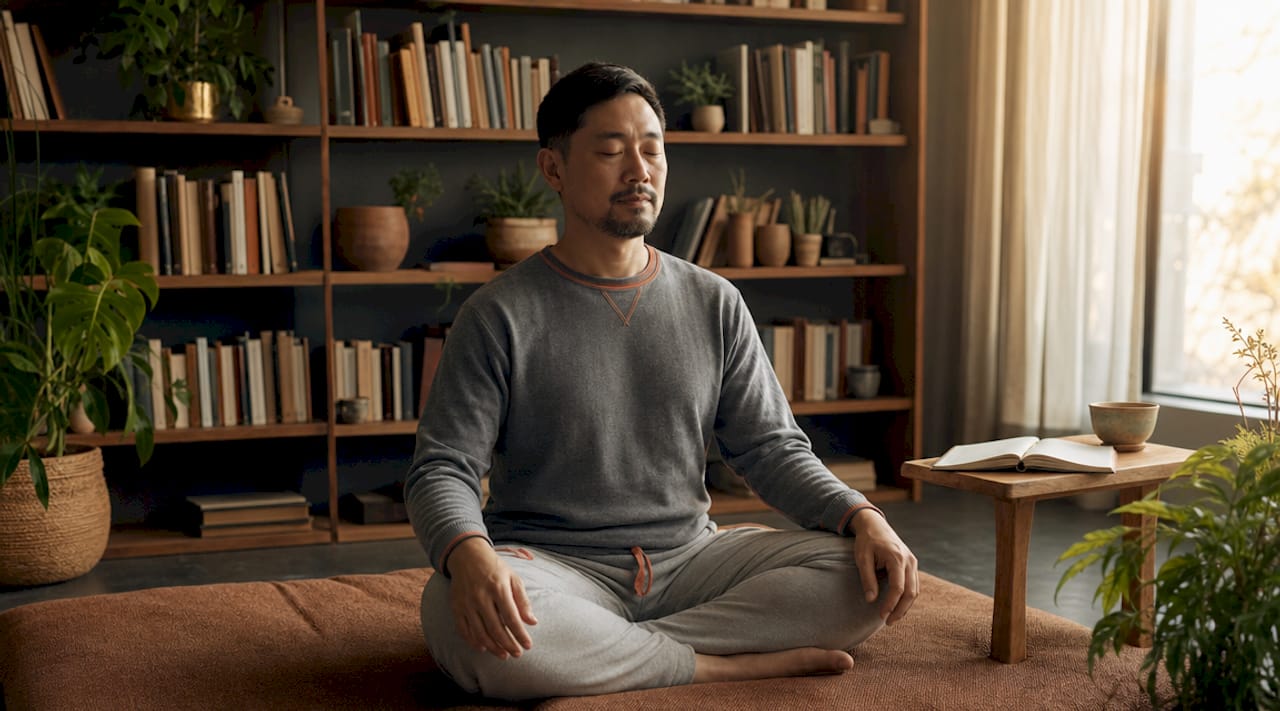
Meditation context is defined as the full set of environmental, personal, and situational conditions surrounding a practice session, and research now confirms it shapes outcomes as powerfully as technique itself. A 2026 meta-analysis of 30 studies found that Buddhist-context practices yield robust well-being improvements, but the magnitude varies significantly by contextual embedding. That finding reframes the core question from “am I meditating?” to “am I meditating in the right conditions?” The industry term for this is contextually embedded meditation, and understanding it is the fastest way to close the gap between inconsistent results and consistent gains.
Why meditation context improves outcomes: the research case
The evidence that context drives results is no longer theoretical. A 2026 predictive modeling study on forest-based meditation found that environmental variables, specifically PM2.5 air quality and acoustic conditions, contributed roughly 33% more to restorative outcomes than baseline physiology alone. That means the space you sit in outweighs your starting physical state when it comes to how much you recover. Researchers at Springer Nature confirmed the same pattern from a different angle: outcome variability in Buddhist meditation is a direct signal that contextual embedding shapes benefits beyond technique.
The benefits of meditation context extend into the psychological layer as well. A randomized trial published in JAMA Psychiatry found that expectancy manipulation affects DMN circuitry, producing monotonic mood improvements tied to how a session is framed before it begins. In plain terms, what you believe about the session before you start it changes what the session does to your brain. This is not a placebo caveat. It is a mechanism you can use deliberately.

How does the physical environment affect meditation?
Sound and air quality are not background details. They are active variables. A 2026 VR-EEG study published in Nature showed that soundscape and visual factors interact to mitigate annoyance and modulate well-being during contemplative states. Audiovisual integration is not additive. It is multiplicative. A clean visual field paired with natural sound produces a restorative effect greater than either element alone.
The forest meditation data makes this concrete. When PM2.5 levels were low and acoustic conditions were calm, restorative scores climbed sharply. When either variable degraded, outcomes dropped regardless of how long participants meditated. This tells you that environmental improvements offer more leverage than adding more minutes to a session held in a poor setting.
| Environmental variable | Effect on restorative outcome |
|---|---|
| Low PM2.5 air quality | Strong positive predictor of restoration |
| Calm acoustic conditions | Significant reduction in perceived stress |
| Natural visual elements | Amplifies restorative effect when paired with sound |
| High noise or pollution | Negates physiological recovery regardless of session length |
Pro Tip: If you cannot access outdoor environments, a HEPA air purifier and a brown noise track are the two lowest-cost changes that most closely replicate the environmental conditions linked to strong restorative outcomes in the 2026 forest meditation research.
Does personalizing your meditation practice change results?
Generic meditation formats produce generic results. A 2026 randomized controlled trial found that personality traits, particularly agreeableness, and practice length both produced significant effects on state mindfulness and negative affect. The study directly refutes the idea that a standard 10-minute session works equally well for everyone. Dose and disposition interact. A person high in neuroticism, for example, may need shorter, more structured sessions before longer open-awareness formats become tolerable rather than anxiety-provoking.
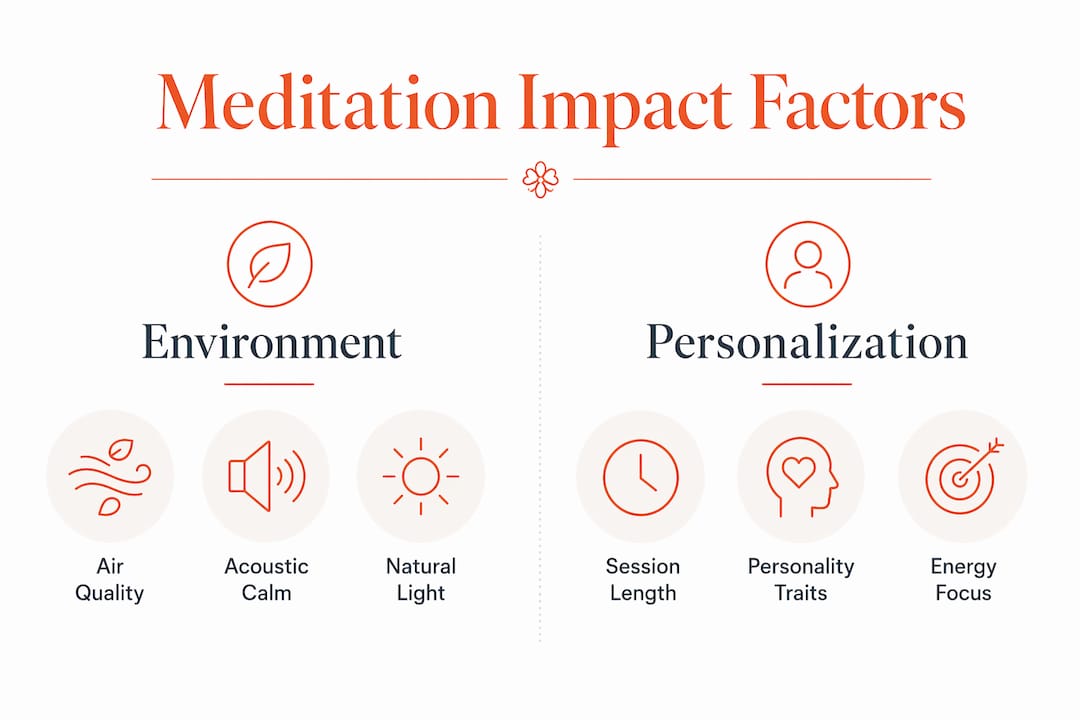
Personalization also addresses the plateau problem. Practice mismatch between goal, dose, and context explains why some practitioners experience declining efficacy over time. The fix is not more effort. It is better alignment between what you need today and what the session delivers. Incorporating psychoeducational components like emotional regulation instruction within a session consistently outperforms generic relaxation scripts, particularly for practitioners managing anxiety or burnout.
Practical personalization strategies by trait profile:
- High agreeableness: Longer sessions with loving-kindness or compassion-focused formats tend to amplify natural prosocial tendencies and produce stronger positive affect gains.
- High neuroticism: Start with body-scan or breath-focused techniques under 8 minutes. Build tolerance before extending duration or introducing open-monitoring styles.
- Low conscientiousness: Anchor sessions to an existing daily habit, such as morning coffee or post-workout, to reduce the friction that breaks adherence.
- High openness: Rotate formats regularly. Novelty sustains engagement and prevents the boredom-driven dropout that structured practitioners rarely experience.
- Stress-specific framing: Match the session theme to the current stressor. Context-matching your session to what is actually draining you produces stronger engagement than a generic calm-down script.
Pro Tip: Before each session, write one sentence describing what is draining your energy right now. Use that sentence to select or frame your practice. This single step aligns the session with your actual psychological state and activates the expectancy mechanisms identified in the JAMA Psychiatry trial.
Why do physiological benefits depend on session timing and protection?
Heart rate variability (HRV) is the most studied physiological marker of meditation benefit, and the 2026 findings on it are counterintuitive. A 2026 mHealth observational study found that daily meditation produces transient HRV increases during and for tens of minutes after a session, but no sustained elevation in baseline daily-life HRV. This distinction matters enormously for how you structure your practice.
The implication is that meditation benefits are episodic states, not permanent upgrades. Protecting the session window is therefore more valuable than maximizing total weekly minutes. Four steps make that protection practical:
- Schedule sessions before high-demand tasks. HRV elevation persists for tens of minutes post-session. Placing meditation before a stressful meeting or difficult conversation lets you carry the physiological benefit directly into the challenge.
- Eliminate interruptions completely. A single notification mid-session disrupts the state-dependent HRV elevation. The transient nature of HRV changes means interruptions do not just pause the benefit. They end it.
- Control the post-session environment. Jumping immediately into a loud or chaotic space after meditating collapses the residual effect faster. Give the state 5 to 10 minutes to stabilize before re-engaging with demands.
- Track session quality, not just duration. A focused 7-minute session in a quiet room produces stronger HRV response than a distracted 20-minute session with background noise. Quality of context outperforms quantity of time.
Active meditation vs. passive environment: which works better?
The honest answer is that they work differently, and the smarter question is how to use both. A 2026 multicenter study of 563 healthcare workers found that passive multisensory “Recharge Rooms” produced a 59.1% reduction in stress and measurable increases in hopefulness and alertness, with no training required. That is a remarkable result for a zero-effort intervention.
Passive environmental experiences lower the activation threshold for active practice. When a person enters a calming sensory environment, their nervous system shifts toward a receptive state before they have done anything intentional. That primed state makes the transition into active meditation easier and more productive. Passive interventions promote adherence precisely because they require no skill and produce immediate reward, which builds the motivational momentum that sustains active practice over time.
| Method | Effort required | Training needed | Stress reduction | Best use case |
|---|---|---|---|---|
| Active meditation | Moderate to high | Yes | Strong, sustained | Daily recovery, focus, emotional regulation |
| Passive Recharge Room | None | No | 59.1% acute reduction | Pre-session priming, workplace recovery |
| Combined approach | Low to moderate | Minimal | Strongest overall | Optimal outcomes across all contexts |
The combined approach is not a luxury. It is the most evidence-aligned strategy available. Use passive environmental design to lower resistance, then layer active practice on top of a nervous system that is already receptive.
How to optimize your meditation context for better results
Improving your meditation context does not require a dedicated room or expensive equipment. It requires deliberate choices about five variables.
- Noise control: Use noise-canceling headphones, a white or brown noise track, or simply close doors and silence devices. Acoustic conditions are among the strongest environmental predictors of restorative outcomes.
- Air quality: Open a window, use a HEPA filter, or practice outdoors when PM2.5 levels are low. The forest meditation data shows air quality independently predicts restoration.
- Lighting: Dim, warm light reduces cortisol signaling and supports the parasympathetic shift that meditation requires. Overhead fluorescent lighting works against you.
- Session framing: State your intention or current stressor before beginning. Expectancy framing activates the prediction mechanisms that amplify affective outcomes.
- Adaptive format selection: Match session length and style to your current energy and personality state rather than defaulting to the same format daily. Apps that adapt meditation to context remove the guesswork from this step entirely.
The biggest pitfall is treating context as fixed. Most practitioners optimize their technique while ignoring the conditions around it. The research is unambiguous: context-matching your practice to your current situation produces stronger outcomes than any technique refinement applied in a mismatched environment.
Key takeaways
Meditation context improves outcomes because environmental quality, personalization, and session framing each independently modulate the physiological and psychological mechanisms that meditation activates.
| Point | Details |
|---|---|
| Environment outweighs duration | Air quality and acoustics contribute ~33% more to restoration than baseline physiology. |
| Personalization closes the gap | Trait moderators like agreeableness and neuroticism require tailored dose and format for optimal results. |
| HRV benefits are episodic | Protect session timing and eliminate interruptions to preserve transient physiological gains. |
| Passive priming amplifies active practice | Multisensory environments reduce stress by 59.1% and lower the barrier to active meditation. |
| Framing shapes brain response | Expectancy manipulation affects DMN circuitry, making pre-session intention-setting a measurable lever. |
The context gap most meditators never close
I have spent years watching people commit to meditation and then quietly give up, not because the practice failed them, but because the conditions around it were working against them. They were meditating in noisy apartments, at inconsistent times, with generic apps that delivered the same script regardless of whether they were burned out or simply tired. The technique was fine. The context was the problem.
What the 2026 research makes clear is that this is not a minor optimization. Environmental and personalization variables account for a substantial share of outcome variance. Ignoring them is like training for a race in the wrong shoes and then concluding that running does not work for you.
The most common misunderstanding I encounter is the belief that more minutes equals more benefit. The HRV data dismantles that assumption directly. A protected, well-framed 7-minute session in a calm environment outperforms a distracted 25-minute session in a chaotic one. The practitioners who get the most from meditation are not the ones who meditate longest. They are the ones who treat the conditions around the session as seriously as the session itself.
My recommendation for 2026 is to audit your context before you audit your technique. Check the room, check the timing, check whether the session theme matches what is actually weighing on you. Experiment with one variable at a time. The gains are faster than most people expect, and they compound.
— Giorgio
How Mosaiic builds context into every session
Mosaiic is built on the premise that context is not optional. Every session on the platform begins with you describing what is draining your energy right now, and the app generates a guided meditation written and narrated specifically for that situation. Each day’s session builds on the last, so the practice evolves as your context changes rather than repeating the same script indefinitely. The result is a practice that stays aligned with your actual psychological state, which is exactly what the 2026 research identifies as the mechanism behind stronger outcomes. Mosaiic’s Daily tier delivers this personalization every day. Explore what context-aware meditation feels like at mosaiic.xyz.
FAQ
What is meditation context?
Meditation context refers to the environmental, personal, and situational conditions surrounding a practice session, including physical setting, session framing, and individual traits. Research confirms these factors independently shape how much benefit a session produces.
Does the environment really change meditation outcomes?
Yes. A 2026 predictive modeling study found that environmental variables like air quality and acoustic conditions contributed approximately 33% more to restorative outcomes than a practitioner’s baseline physiology.
How does personalization improve meditation results?
A 2026 randomized controlled trial found that personality traits and session length both significantly affect state mindfulness and negative affect, confirming that tailored practice outperforms generic formats for most individuals.
Why does HRV increase during meditation but not long-term?
The 2026 mHealth study found that HRV elevation is a transient, state-dependent effect tied to the meditation episode itself, not a permanent baseline shift. Protecting session quality and timing preserves this acute physiological benefit.
Can passive environments replace active meditation?
Passive multisensory environments reduce stress significantly and prime the nervous system for active practice, but they do not replicate the sustained cognitive and emotional regulation benefits that trained active meditation produces over time.