Micro-Meditation Practice: Quick Stress Relief for Busy People
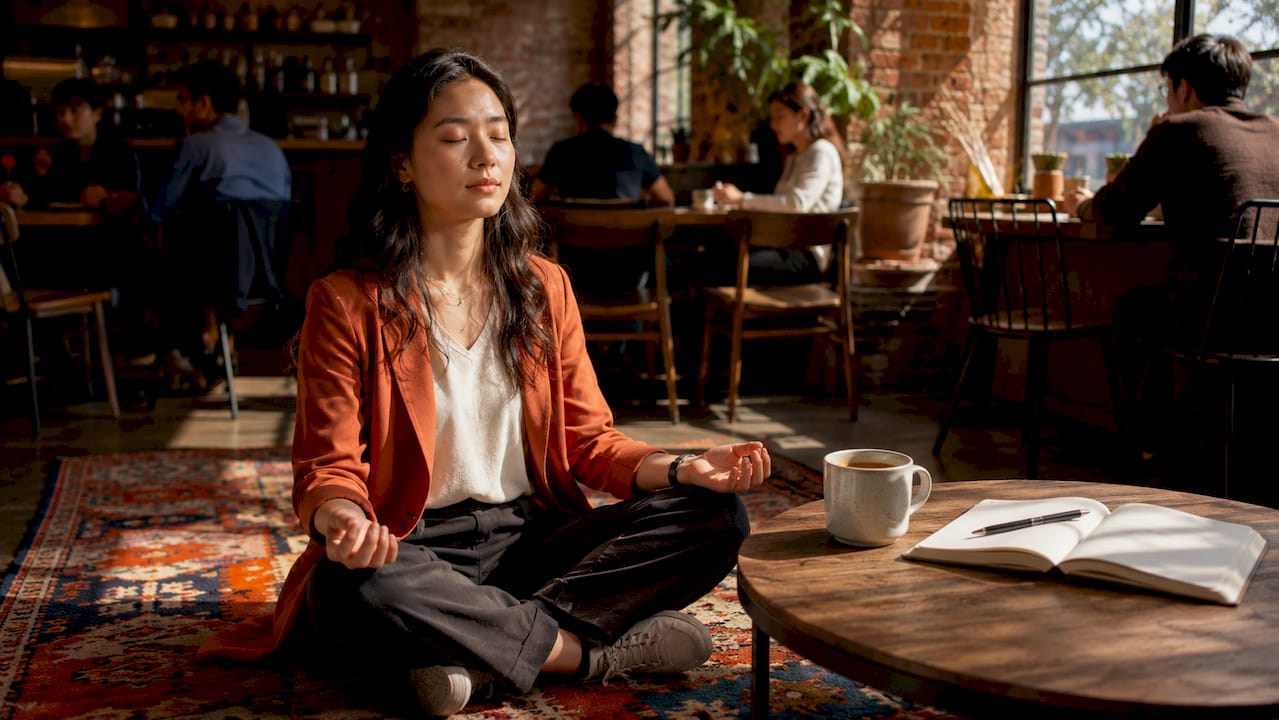
Micro-meditation practice is the technique of inserting short, intentional moments of mindfulness into your day to calm your nervous system and reconnect with the present moment. These sessions last between 10 seconds and 5 minutes and fit inside the gaps you already have: a red light, a bathroom break, the 90 seconds before a meeting starts. Unlike what is mindfulness meditation in its traditional form, micro-meditation asks nothing of your schedule. Programs at UCLA Mindful and research from Northeastern University confirm that frequency matters more than duration when it comes to breaking stress cycles.
What is micro-meditation practice and why does it work?
Micro-meditation is a structured form of short meditation practice rooted in the same principles as mindfulness but designed for real-world constraints. The formal term in research literature is “microdosing mindfulness,” and both phrases describe the same thing: brief, repeated attention training spread across the day.
The science behind it is straightforward. Your nervous system does not need 45 minutes of silence to shift out of fight-or-flight mode. It needs a signal. A single conscious breath, a body scan lasting 60 seconds, or a deliberate pause before responding to a stressful email can interrupt the stress loop before it compounds. Distributed short sessions throughout the day more effectively prevent stress accumulation than fewer longer sessions. That finding flips the assumption that meditation only counts when it is long.
For anyone experiencing burnout, this reframe is significant. You are not failing at meditation because you cannot sit still for 20 minutes. You are simply using the wrong format for your life right now.
What are the key benefits of micro-meditation for stress and energy?
The benefits of micro-meditation are not a watered-down version of traditional practice. Research shows they are, in many cases, equivalent.
- Stress and mood improvement: Four 5-minute sessions produce stress, anxiety, and depression benefits comparable to four 20-minute sessions. Frequency, not duration, drives the result.
- Emotional exhaustion relief: Brief work-day mindfulness reduces emotional exhaustion and improves task transitions without carrying residual stress into the next activity.
- Nervous system regulation: Extended exhales and physiological cues immediately signal safety to the nervous system, pulling you out of fight-or-flight within seconds.
- Better sleep: Short, frequent sessions done 2–3 times weekly support sleep quality better than daily long sessions, which may over-stimulate the brain past a useful threshold.
“Ten 1-minute sessions dispersed across the day outperform a single 10-minute session for interrupting stress accumulation.” — Peacefully Proven, citing distributed practice research
The energy angle matters here. Most people associate meditation with winding down. Micro-meditation, done correctly, does the opposite. It clears the mental clutter that drains you, so you return to your work or your family with more capacity, not less. Read more about five minutes of mindfulness and what it actually does to your stress response.
Micro-meditation vs. traditional meditation: what’s the real difference?
Both approaches train attention and regulate the nervous system. The differences come down to depth, setting, and purpose.
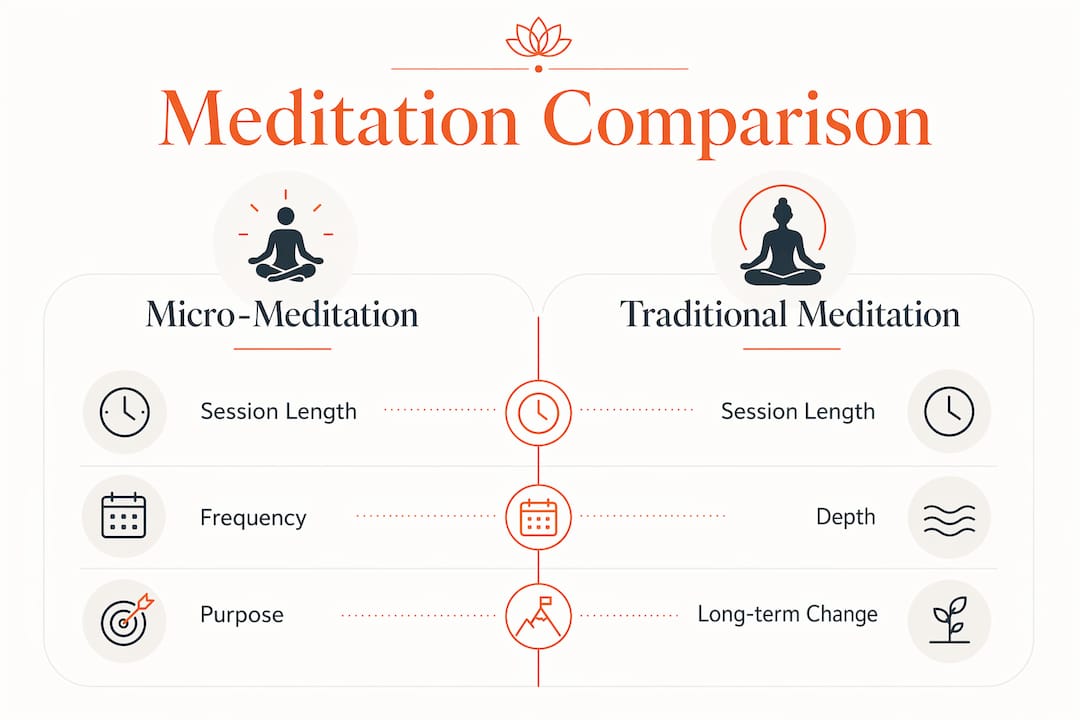
| Feature | Micro-Meditation | Traditional Meditation |
|---|---|---|
| Session length | 10 seconds to 5 minutes | 15–45 minutes |
| Frequency | Multiple times daily | Once daily or less |
| Setting | Anywhere, eyes open or closed | Quiet, dedicated space |
| Primary goal | Interrupt stress in real time | Long-term brain and behavior change |
| Entry barrier | Very low | Moderate to high |
| Long-term brain change | Limited | Significant with consistent practice |
Longer sessions lead to deeper long-term brain changes, including structural shifts in the prefrontal cortex and amygdala. Micro-meditation does not replicate that. What it does is provide daily maintenance, keeping your emotional regulation functional between those deeper sessions, or serving as your entire practice when life makes longer sessions impossible.
Think of it like physical fitness. A 5-minute walk does not replace a strength training session. But five walks spread across a sedentary day do more for your cardiovascular health than one walk and eight hours of sitting. The same logic applies here.
Pro Tip: If you already have a longer meditation practice, use micro-sessions as a bridge during high-stress days rather than skipping practice entirely. Consistency at any length beats perfection at one length.
What are the best micro-meditation techniques to try today?
The best micro-meditation exercises share one quality: they work with your body, not against it. Here are the most effective methods, ranked by ease of entry.
The extended exhale breath
- Inhale through your nose for 4 counts.
- Exhale through your mouth for 6–8 counts.
- Repeat 3–5 times.
This works because a longer exhale activates the parasympathetic nervous system directly. You are not trying to relax. You are giving your body a physiological instruction it cannot ignore.
The STOP method
- S — Stop what you are doing.
- T — Take one conscious breath.
- O — Observe your body, thoughts, and surroundings without judgment.
- P — Proceed with awareness.
The STOP method, developed in mindfulness-based stress reduction programs, takes under 60 seconds. It works at your desk, in your car, or in a grocery line.
The body awareness scan
Sit or stand wherever you are. Starting at the top of your head, move your attention slowly down to your feet. Notice tension without trying to fix it. The entire process takes 90 seconds and resets your relationship to physical stress before it becomes emotional reactivity.
Common pitfalls to avoid:
- Expecting silence. Even 120 seconds of silence feels daunting to most beginners. Micro-meditation does not require silence. It requires intention.
- Striving for perfection. The goal is interrupting automatic stress patterns, not achieving a blank mind. A wandering thought is not a failed session.
- Waiting for the right moment. The right moment is the one you are in. Commuting, waiting for coffee to brew, or standing in an elevator all qualify.
Pro Tip: Attach your first micro-session to an existing habit, like your morning coffee or the moment you open your laptop. Habit stacking removes the need for willpower.
How to build micro-meditation into a busy life
Sustainability is the real challenge. Most people try micro-meditation for a week and then forget about it. The fix is not motivation. It is structure.
- Use environmental cues. A sticky note on your monitor, a phone wallpaper with a reminder, or a specific alarm labeled “breathe” all work better than relying on memory during a stressful day.
- Aim for frequency over length. Three 2-minute sessions beat one 6-minute session for stress interruption. Set a realistic target of 3–5 micro-sessions daily before trying to extend duration.
- Match the practice to your energy state. On high-stress days, use the extended exhale technique. On lower-stress days, try a longer body scan. Adaptive meditation techniques that flex with your daily state produce better long-term results than a rigid routine.
- Track streaks, not minutes. Apps that log frequency rather than duration reinforce the right behavior. Look for meditation app features that support short, flexible sessions rather than locking you into 20-minute programs.
- Practice self-compassion when you miss a session. Missing one session is not failure. Deciding you have failed and quitting is. The research on building self-trust through micro-practice is clear: consistency over time matters far more than any single session.
The mindset shift that makes this sustainable is simple. Stop treating meditation as a task to complete. Start treating it as a resource you access throughout the day, the same way you drink water or stretch your back.
Key takeaways
Micro-meditation works because frequency and consistency across the day interrupt stress accumulation more effectively than any single long session.
| Point | Details |
|---|---|
| Definition and duration | Micro-meditation sessions last 10 seconds to 5 minutes and fit into existing daily gaps. |
| Equivalent stress relief | Four 5-minute sessions match the stress and mood benefits of four 20-minute sessions. |
| Best techniques | Extended exhale breathing, the STOP method, and body scans are the most accessible entry points. |
| Habit formation | Attach sessions to existing habits and use environmental cues rather than relying on willpower. |
| Complements longer practice | Micro-meditation maintains daily emotional regulation but does not replace deep, long-term contemplative practice. |
What i’ve learned after years of watching people try to meditate
Most people who tell me they “can’t meditate” have tried exactly one format: sitting still for 20 minutes in silence, usually at night when they are already exhausted. That is the hardest possible version of meditation. It is like deciding you hate running after attempting a marathon with no training.
What I have noticed consistently is that the people who stick with any mindfulness practice are not the ones who find it easiest. They are the ones who found a format that fit their actual life. Micro-meditation is that format for most busy people. The beginner who does three 90-second breathing exercises during their workday builds more genuine meditation tolerance than the person who attempts one 20-minute session and gives up.
The counterintuitive insight I keep coming back to is this: shorter sessions remove the performance pressure. When you only have 60 seconds, you cannot fail at it. That psychological safety is what allows the practice to actually work. You stop trying to meditate correctly and start just noticing. That noticing is the whole point.
My honest caution is about expectations. Micro-meditation will not produce the structural brain changes that years of deep contemplative practice create. If you are dealing with clinical anxiety or depression, it is a complement to professional support, not a replacement. But for the daily grind of burnout, decision fatigue, and stress accumulation? It is one of the most underused tools available to you. Start with one exhale. Do it again tomorrow.
— Giorgio
Start rebuilding your energy with Mosaiic
If you are ready to move beyond generic meditation apps, Mosaiic was built for exactly this situation.
Mosaiic generates a personalized, narrated 5-minute session each day based on what is actually draining you. You describe your situation, whether that is burnout, a rough week, or a loss of motivation, and the app writes a meditation specific to that context. Each session builds on the last, so your practice evolves as you do. The positioning is deliberate: energy, not just calm. Mosaiic is designed to leave you fuller, not sleepier. Explore the Free, Starter, and Daily tiers and find the format that fits your life today.
FAQ
How long is a micro-meditation session?
Micro-meditation sessions last between 10 seconds and 5 minutes. The goal is frequency across the day, not duration in any single sitting.
Can micro-meditation replace regular meditation?
Micro-meditation complements but does not replace longer practice. Longer sessions produce deeper long-term brain changes, while short sessions maintain daily emotional regulation and stress relief.
What is the easiest micro-meditation technique for beginners?
The extended exhale breath is the most accessible starting point. Inhale for 4 counts, exhale for 6–8 counts, and repeat 3 times. It takes under 90 seconds and works anywhere.
How often should i practice micro-meditation for stress relief?
Research supports 3–5 short sessions spread across the day. Frequency matters more than session length for interrupting stress accumulation before it compounds.
Does micro-meditation work if my mind keeps wandering?
A wandering mind does not mean a failed session. The practice is noticing that your mind wandered and returning your attention. That act of returning is the training itself.