Conversational Meditation Intake: What It Is

Conversational meditation intake is a dialog-based process that captures your current emotional and physical state through natural language to create personalized meditation experiences. Unlike static forms or multiple-choice quizzes, this method uses a short back-and-forth exchange to understand what you are actually carrying right now, not just your general stress level or sleep habits. The process powers both AI-driven apps like Mosaiic and live coaching sessions, and it produces sessions that address your specific situation rather than a generic mood category. Understanding conversational meditation intake is the first step toward getting real value from any guided meditation practice.
What is conversational meditation intake?
Conversational meditation intake is the structured process of collecting your emotional and physical context through natural language conversation before a meditation session begins. The industry term for this broader category is guided intake, but the conversational format is what separates modern AI-powered tools from older, form-based approaches. Instead of asking you to rate your stress on a scale of 1–10, a conversational intake asks what is actually happening and then follows up based on your answer.
The core mechanics work in 3–5 conversational turns in AI-powered apps, adding roughly 2–3 minutes to your setup time. That small investment pays off because the system captures nuanced context, not just category tags. A static quiz might label you as “stressed.” A conversational intake learns that you are stressed because a project deadline collided with a difficult conversation with your manager, and that you have not slept well in three days. Those details change the meditation entirely.
The goal is not to produce a polished summary of your life. The goal is to give the system or coach enough real, in-the-moment information to build something that actually fits. Mosaiic, for example, uses this approach to write and narrate a fresh 5-minute session each day based on what you describe, so no two sessions are identical. That is what user input shapes in a modern meditation app.

How AI intake differs from coaching intake
Formal meditation coaching intake sessions last 45 minutes and cover comprehensive history, goals, and broader mental health context. AI-driven intakes are brief by design, focused on your momentary state rather than your full background. Both formats serve the same purpose: gathering enough context to make the session relevant. The difference is depth and duration, not intent.
Pro Tip: Keep your intake answers short and feeling-focused. One or two honest sentences about what is weighing on you right now will produce a better session than a detailed paragraph explaining the backstory.
What are the mental health benefits of conversational intake?
The benefits of conversational meditation intake extend well beyond session personalization. The act of articulating your emotional state before meditating is itself a mental health intervention.
A University of Michigan study found that expressive conversation reduces rumination scores by 31–47% over an 8-week period and improves cognitive flexibility. Rumination, the habit of replaying negative thoughts, is one of the primary drivers of anxiety and depression. Reducing it through structured conversation before meditation compounds the benefit of the session itself.
The mechanism behind this is affect labeling. Articulating your feelings in words builds emotional vocabulary and scaffolds emotional awareness, a process social neuroscience has documented extensively. When you say “I feel stuck and a little resentful about this project,” you are not just describing a state. You are creating cognitive distance from it, which makes it easier to process during meditation.
“Conversational intake builds emotional awareness by affect labeling, making meditation more effective and meaningful.” — Keoria Blog
Cognitive reframing follows naturally from this process. Over time, people who practice regular conversational intake report improved decision-making and a clearer sense of what they actually need from a session. The intake is not a preamble to the real work. It is part of the work. Understanding why context improves outcomes helps explain why this step matters so much.
Conversational intake vs. traditional meditation methods
Not all intake processes are equal. The table below compares the most common formats across four key dimensions.
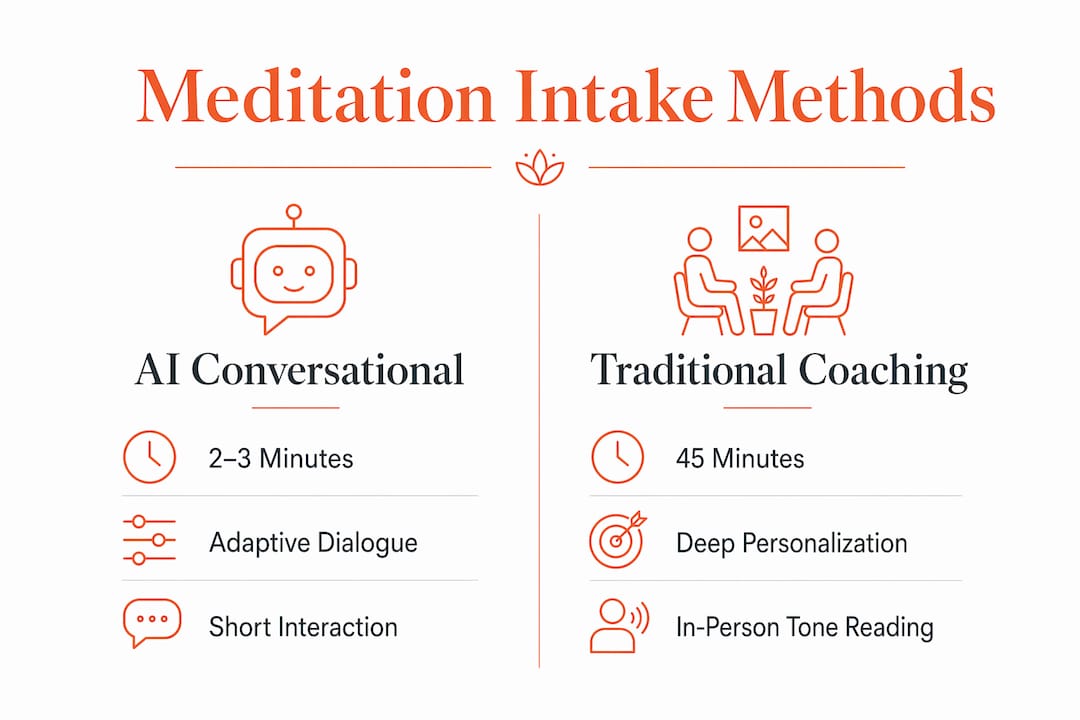
| Format | Duration | Customization | Interaction Style |
|---|---|---|---|
| AI conversational intake | 2–3 minutes | High, session-specific | Natural language dialog |
| Formal coaching intake | 45 minutes | Very high, history-based | Live relational conversation |
| Static quiz or form | 1–2 minutes | Low, category-based | Multiple choice or sliders |
| No intake (pre-recorded) | 0 minutes | None | One-size-fits-all |
Static quizzes produce category tags. Conversational AI follows up on vague answers and routes you more accurately to what you need. A quiz that asks “How are you feeling?” and offers five emoji options cannot capture that you are exhausted from caregiving but also quietly proud of how you handled a hard week. A conversational intake can.
Live coaching intake offers the deepest personalization because a skilled coach reads tone, hesitation, and what you do not say. The tradeoff is time and cost. AI-driven conversational intake sits between the two extremes: faster than coaching, far more precise than a form. For daily practice, that balance is practical and sustainable.
The distinction between apps and live classes matters here too. Apps with conversational intake can deliver coaching-level personalization at scale, which is why the format is growing quickly in 2026.
Pro Tip: If you use a coaching intake, treat it like a conversation with a trusted friend, not a medical intake form. The more naturally you speak, the more useful the session will be.
How to practice conversational meditation intake effectively
Getting the most from any conversational intake process comes down to how you show up for it. The following practices apply whether you are using an AI app or working with a live coach.
- Be honest, not polished. Meditation coaches emphasize that embracing unfiltered stress during intake produces better outcomes than presenting a cleaned-up version of how you feel. If you are irritable and you do not know why, say that.
- Focus on feeling, not narrative. Experienced practitioners warn that over-intellectualizing intake conversations is counterproductive. Brief, feeling-focused input preserves your energy for the meditation itself. Describe your current state in one or two sentences, then stop.
- Prepare with a moment of stillness. Before you open the app or start a coaching call, take 30 seconds to check in with your body. Notice where you feel tension, fatigue, or restlessness. That physical awareness will make your intake answers more accurate.
- Treat post-session feedback as part of the intake. The intake cycle does not end when the session begins. Post-session feedback is the second half of the process, and it trains the system or coach to refine future sessions. Skipping it leaves personalization on the table.
- Practice regularly, not just when you are struggling. Conversational intake is most powerful when it tracks your state over time. Session progression tracking shows how your needs shift week to week, which makes each new session more targeted than the last.
The goal is not to perform wellness. The goal is to give the intake process something real to work with. Raw honesty in two sentences beats a thoughtful paragraph every time.
Key takeaways
Conversational meditation intake works because it captures your real emotional state through natural language, producing sessions that address what you are actually experiencing rather than a generic mood category.
| Point | Details |
|---|---|
| Core definition | Conversational intake collects emotional context through 3–5 natural language turns before a meditation session. |
| Mental health benefit | Expressive conversation reduces rumination by 31–47% and builds emotional awareness through affect labeling. |
| Advantage over static forms | Conversational AI follows up on vague answers, producing session-specific personalization that quizzes cannot match. |
| Best practice for intake | Be honest and feeling-focused; raw, brief input outperforms polished storytelling every time. |
| Intake is iterative | Post-session feedback completes the intake cycle and improves personalization in future sessions. |
What i have learned from watching people do this wrong
The most common mistake I see is treating the intake like a performance review. People write careful, measured sentences about their stress levels. They frame their situation in the most reasonable light possible. And then they wonder why the session feels generic.
The intake is not asking you to explain yourself. It is asking you to report your current state, the way you would tell a close friend “I am completely fried and I cannot figure out why.” That sentence is worth more than three paragraphs of context.
The second thing I have noticed is that people underestimate the post-session feedback step. They finish a meditation, feel slightly better, and close the app. But the feedback loop is where the system actually learns what worked. Skipping it is like getting a great recommendation from a doctor and then never telling them whether it helped.
The third observation is more encouraging. People who stick with conversational intake for more than two weeks almost universally report that they get better at knowing what they feel. The intake trains you, not just the system. That is the part most articles miss entirely. The adaptive quality of the process builds self-awareness as a side effect, which makes every future session more useful.
My honest view is that conversational intake is the most underrated feature in modern meditation tools. Most people treat it as a setup step. It is actually the core of why personalized meditation works at all.
— Giorgio
Try personalized meditation with Mosaiic
Mosaiic is built around conversational meditation intake. Every day, you describe what is draining you, and the app writes and narrates a fresh 5-minute session specific to that context. No pre-recorded libraries. No generic calm. Each session builds on the last, so the experience gets sharper the longer you use it.
The positioning is deliberate: energy, not just calm. Mosaiic is designed to leave you fuller, not sleepier. Three tiers are available, including a Free option with sample sessions, so you can experience the intake process before committing. If you want meditation that actually fits your day, start with Mosaiic and see what a real conversational intake produces.
FAQ
What is conversational meditation intake in simple terms?
Conversational meditation intake is a short natural language exchange that captures your current emotional and physical state before a meditation session. It replaces static forms with a dialog that adapts based on your answers, producing a more personalized session.
How long does a conversational meditation intake take?
AI-driven conversational intakes typically take 2–3 minutes and run for 3–5 conversational turns. Formal coaching intakes last around 45 minutes and cover broader history and goals.
What questions are asked during a meditation intake?
Questions for meditation intake focus on your current emotional state, what is weighing on you right now, and any physical sensations like tension or fatigue. Follow-up questions dig deeper when your initial answer is vague or general.
Does conversational intake actually improve meditation outcomes?
Research from the University of Michigan shows expressive conversation reduces rumination by 31–47% over eight weeks. That reduction compounds the benefit of the meditation session itself, making the intake a mental health tool in its own right.
Can i practice conversational meditation intake on my own?
You can approximate the process by journaling your current emotional state in two to three honest sentences before meditating. For full personalization, AI apps like Mosaiic or a live meditation coach will produce better results because they adapt their questions based on what you share.