How Five Minutes of Mindfulness Helps Your Stress
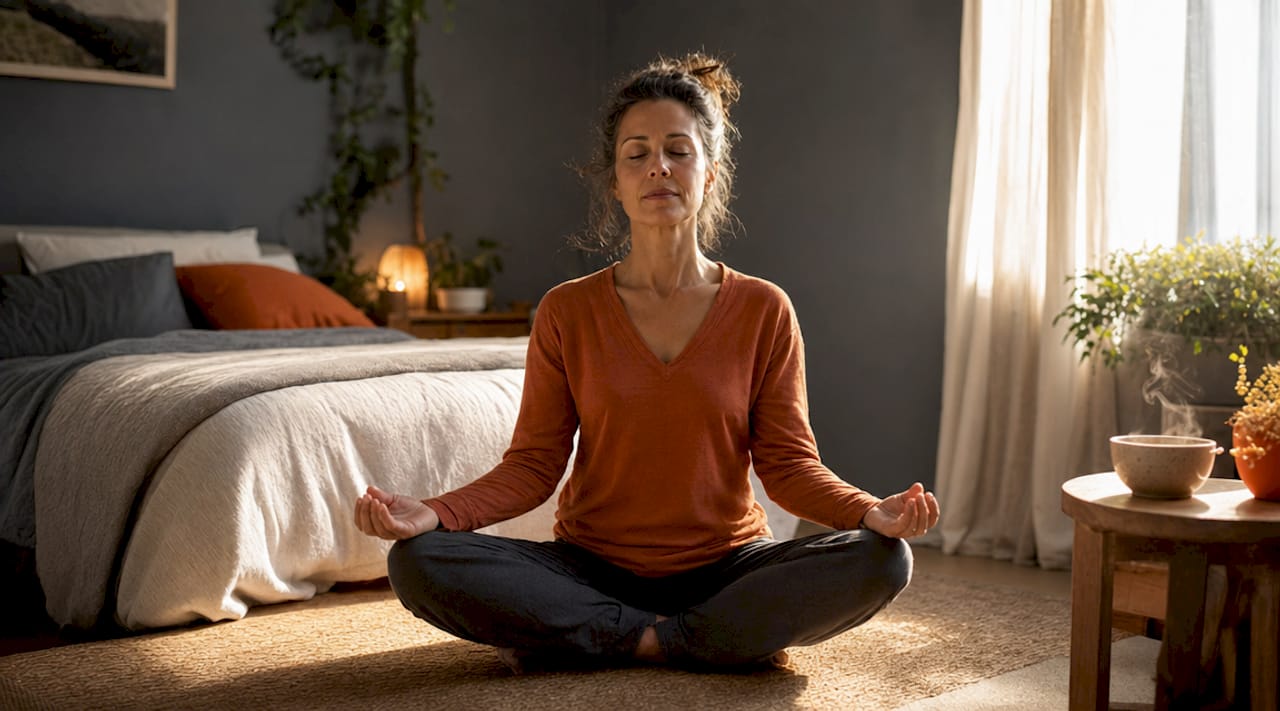
Mindfulness is defined as focused, present-moment attention practiced without judgment, and as little as five minutes daily delivers measurable reductions in stress and improvements in mental clarity. Research from Mayo Clinic, a 2026 PubMed study on slow-paced breathing, and meta-analyses published in Frontiers in Psychology all confirm that brief, consistent practice works. Understanding how five minutes of mindfulness helps means recognizing that the quality of your attention matters more than the length of your session. You do not need a retreat, a cushion, or an hour of silence. You need five minutes and the willingness to show up for them.
What does science say about the benefits of five-minute mindfulness?
The science is clear and consistent: short mindfulness sessions produce real physiological and psychological change. Mayo Clinic confirms that focused breathing for even one minute lowers stress, and ten minutes makes a meaningful positive difference. This means the threshold for benefit is far lower than most people assume.
A 2026 PubMed study tracked 67 students practicing five-minute guided slow-paced breathing three times daily over four days. Perceived stress was consistently lower after each session compared to the control group. That is a direct, measurable effect from a practice shorter than most commercial breaks.
A four-week online intervention published in Motivation and Emotion found that mindfulness and breathing exercises both reduced perceived stress significantly compared to a waitlist control group, with mindfulness showing a moderate effect size. The sessions ran nine to twelve minutes, which confirms that you do not need a lengthy program to see results. A separate Frontiers in Psychology meta-analysis found that short-term online interventions of four weeks or less actually produced larger effect sizes than longer programs, and daily practice outperformed weekly practice by a significant margin.
| Study | Duration | Key finding |
|---|---|---|
| PubMed SPB study (2026) | 5 minutes, 3x daily | Immediate perceived stress reduction vs. control |
| Motivation and Emotion (2026) | 9-12 minutes, 4 weeks | Moderate effect size for stress reduction |
| Frontiers in Psychology meta-analysis | Up to 4 weeks | Short-term daily practice shows largest effect |
| MDPI Scoping Review | 10-120 min sessions | Brief structured formats feasible and effective |
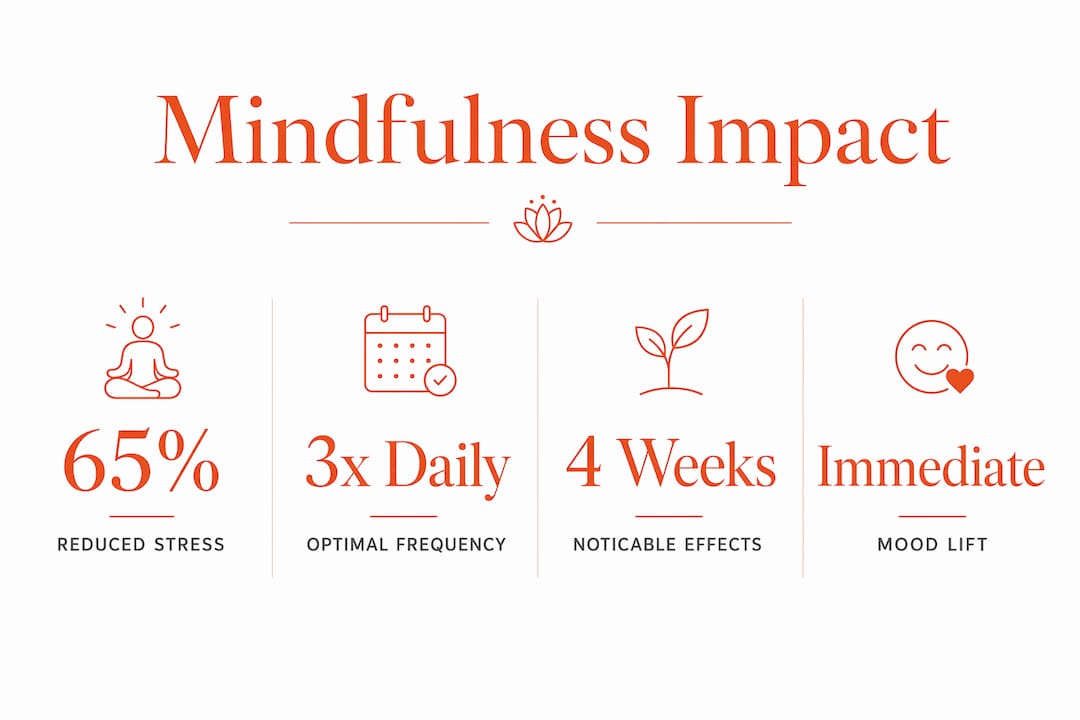
Pro Tip: Daily practice beats weekly practice for stress relief. Even a single five-minute session each morning produces stronger cumulative results than a longer session once a week.
How does mindfulness in five minutes work compared to longer sessions?
The mechanism behind brief mindfulness is not mystical. Both mindfulness and breathing exercises reduce stress by down-regulating physiological arousal and redirecting attention away from threat-focused thinking. Your nervous system responds to focused breathing the same way it responds to safety: it slows your heart rate, lowers cortisol, and shifts you out of fight-or-flight mode.

Mayo Clinic makes a point that most people overlook: it is attention use, not time, that determines mindfulness efficacy. A distracted twenty-minute session produces less benefit than a focused five-minute one. This reframes the entire conversation about session length.
Research on dose-personality interactions in mindfulness practice shows that the optimal session length varies by individual. Some people reach their effective threshold at three minutes; others need closer to ten. Testing different durations between three and five minutes to find what feels tolerable and effective is a legitimate, evidence-supported strategy.
Here is what distinguishes brief practices from longer programs:
- Accessibility. Five-minute sessions fit into transitions, commutes, and lunch breaks without restructuring your day.
- Adherence. Shorter sessions have higher completion rates, which means more consistent practice over time.
- Immediacy. Brief sessions produce immediate stress relief, while longer programs build cumulative resilience over weeks.
- Flexibility. Micro-practices can be inserted before high-stress moments, such as a difficult meeting or a hard conversation, rather than scheduled in advance.
Pro Tip: If you find your mind wandering constantly during a five-minute session, try reducing to three minutes first. Building the habit of focused attention matters more than hitting a specific time target.
How does five-minute mindfulness compare with brief breathing exercises?
Mindfulness and breathing exercises are related but not identical. Mindfulness is the broader practice of present-moment awareness, which can include breath focus, body scans, or open attention. Breathing exercises, specifically slow-paced breathing, are a structured subset of mindfulness that cue attention on the breath at a controlled pace, typically five to six breaths per minute.
The 2026 SPB study found that guided, structured breathing exercises often outperform open-ended mindfulness for immediate stress reduction in brief sessions. The reason is specificity: when your attention has a clear anchor, like the rhythm of your breath, it is harder for the mind to drift toward stressors. Open mindfulness requires more skill to sustain, which makes it less reliable for beginners in short windows.
That said, the best approach depends on your situation and preference. The same study found that perceived naturalness of the exercise directly predicts how much stress reduction you experience. If slow-paced breathing feels forced or clinical, a softer mindfulness approach may serve you better.
| Technique | Best for | Limitation |
|---|---|---|
| Slow-paced breathing | Immediate stress relief, beginners | Can feel mechanical if forced |
| Open mindfulness | Building long-term awareness | Requires more skill to sustain briefly |
| Body scan | Physical tension release | Less effective in under three minutes |
| Guided audio session | Consistency and structure | Requires a device or app |
Combining both approaches works well in practice. Start with two minutes of slow-paced breathing to anchor your attention, then shift to open mindfulness for the remaining three minutes. This hybrid approach uses the structure of breathing to settle the nervous system before widening awareness.
What are practical ways to integrate five-minute mindfulness into daily life?
The biggest barrier to consistent mindfulness practice is not motivation. It is friction. Micro-practices work precisely because they occur in real-life contexts without requiring a separate time block or a special environment. Mindfulness researcher Shalini Bahl describes mindful moments before daily actions as a way to make the practice both accessible and genuinely useful.
Here is a practical five-step framework for a five-minute mindfulness session you can use anywhere:
- Choose your anchor. Decide before you start whether you will focus on your breath, a physical sensation, or ambient sound. Ambiguity at the start wastes time and attention.
- Set a timer. Use your phone’s timer for exactly five minutes. Knowing the session has a defined end removes the mental overhead of wondering when to stop.
- Take three slow breaths to begin. Inhale for four counts, hold for two, exhale for six. This activates the parasympathetic nervous system within the first thirty seconds.
- Return without judgment. When your mind wanders, and it will, simply notice it and return to your anchor. Each return is the practice, not a failure.
- Close with one deliberate thought. Before opening your eyes, name one thing you are about to do next. This connects the calm of the session to the action that follows.
Context-specific placement makes the habit stick faster. Try a five-minute session before your first meeting of the day, during your lunch break before eating, or immediately after a stressful interaction. These context-specific meditations work because the trigger is already built into your schedule. You do not need to remember to practice. The situation reminds you.
For those who prefer guided support, apps and audio programs remove the cognitive load of self-directing the session. Energy-focused meditations are particularly effective in the morning, when the goal is activation rather than relaxation. The distinction matters: a session designed to calm you down before bed serves a different purpose than one designed to focus and energize you before work.
Pro Tip: Attach your five-minute practice to an existing habit, like making coffee or sitting down at your desk. Habit stacking removes the need for willpower and dramatically increases consistency over the first two weeks.
Key takeaways
Five minutes of daily mindfulness reduces stress through attention regulation and physiological down-regulation, and daily practice consistently outperforms longer but less frequent sessions.
| Point | Details |
|---|---|
| Brief sessions work | Even one minute of focused breathing lowers stress, per Mayo Clinic research. |
| Daily beats weekly | Short-term daily practice produces larger effect sizes than weekly longer sessions. |
| Attention quality matters | A focused five-minute session outperforms a distracted twenty-minute one. |
| Naturalness predicts results | Choose the technique that feels most natural to you for the greatest stress reduction. |
| Micro-practices fit real life | Placing sessions before existing daily actions removes friction and builds consistency. |
Why most people are wrong about needing more time
Most people who try mindfulness and quit do so because they believe five minutes is not enough to matter. That belief is the problem, not the practice. Every piece of evidence I have encountered points in the same direction: the gap between zero minutes and five minutes is enormous. The gap between five minutes and thirty minutes is much smaller than people think.
What I find more interesting is the naturalness finding from the SPB research. Stress reduction from breathing exercises is not just about technique. It is about whether the technique feels right to you. I have seen people get more from a simple breath count than from a sophisticated body scan, purely because the breath count felt intuitive. That is not a minor detail. It is the whole game.
The other thing worth saying directly: do not wait until you are calm enough to meditate. The practice is for the moments when you are not calm. A morning energy ritual practiced before the day accelerates is more effective than a recovery session practiced after you are already depleted. Start before the stress arrives, not after.
The goal is not to become someone who meditates. The goal is to become someone who handles difficulty better. Five minutes a day, done consistently, gets you there faster than any weekend retreat.
— Giorgio
Start your five-minute practice with Mosaiic
Mosaiic is a personalized meditation app that generates daily guided five-minute sessions based on what is actually draining your energy right now. You describe your situation, whether it is burnout, a rough week, or a loss of motivation, and Mosaiic writes and narrates a session specific to that context. Each session builds on the last, so your practice evolves as you do. The positioning is deliberate: energy, not just calm. Sessions are designed to leave you sharper and more focused, not sleepy.
If you have been looking for a way to make brief mindfulness stick, Mosaiic removes the guesswork. Explore the Mosaiic app and start your first five-minute session today.
FAQ
How does five minutes of mindfulness help with stress?
Five minutes of mindfulness reduces stress by activating the parasympathetic nervous system and redirecting attention away from threat-focused thinking. Mayo Clinic confirms that even one minute of focused breathing produces a measurable stress-lowering effect.
Is five minutes of mindfulness enough to see real benefits?
Yes. A 2026 PubMed study found that five-minute slow-paced breathing sessions practiced three times daily significantly reduced perceived stress compared to a control group over four days. Consistency matters more than session length.
What is the difference between mindfulness and breathing exercises?
Mindfulness is the broader practice of present-moment awareness, while breathing exercises are a structured subset that anchors attention to a controlled breath rhythm. Both reduce stress effectively, but guided breathing often produces faster results for beginners in short sessions.
How often should I practice five-minute mindfulness?
Daily practice produces the strongest results. A Frontiers in Psychology meta-analysis found that daily mindfulness practice generates larger effect sizes than weekly practice, even when total time invested is similar.
Can I practice mindfulness without an app or guide?
Yes. A simple approach is to set a five-minute timer, focus on slow breaths at a count of four in and six out, and return your attention to your breath each time it wanders. Guided sessions from apps like Mosaiic add structure and personalization, which improves consistency for most people.