Adaptive Meditation Techniques for Daily Energy and Clarity
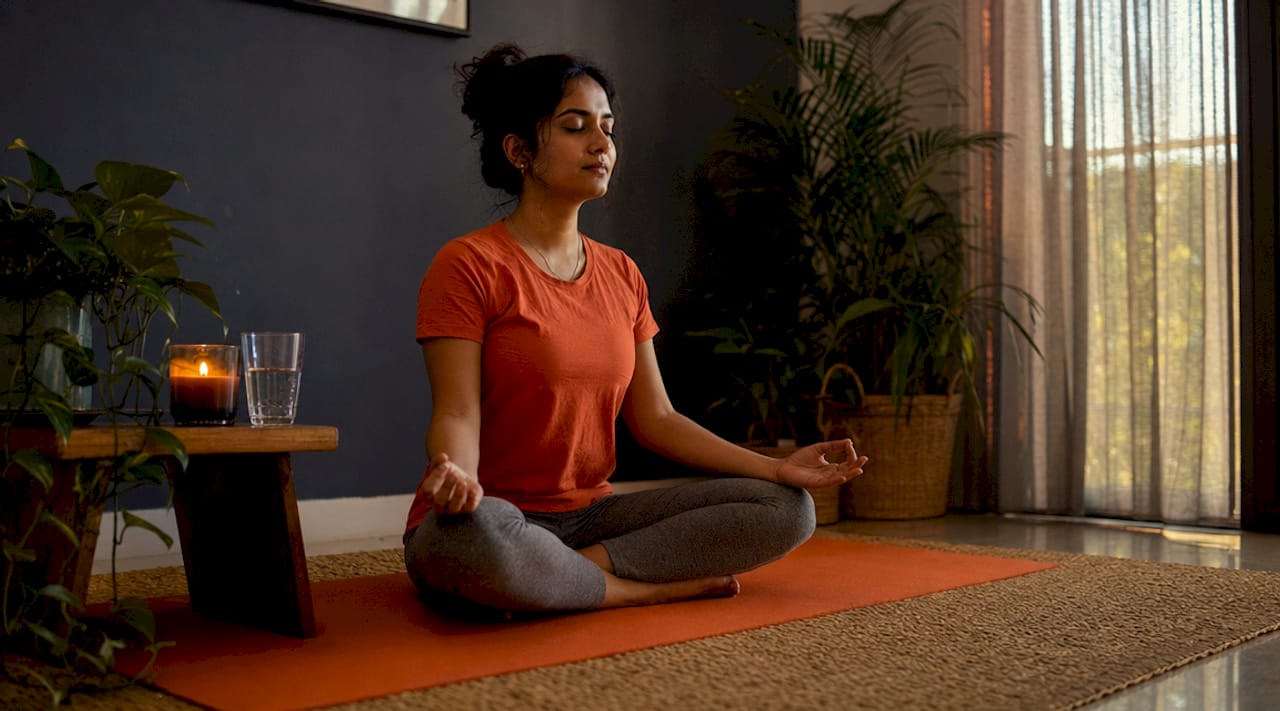
Adaptive meditation techniques daily are brief, personalized mindfulness moments woven into your existing routine to rebuild energy and reduce mental drain. Unlike fixed 20-minute sessions that most people abandon within weeks, these methods flex around your schedule, your stress level, and your specific situation on any given day. Research on systems like MindfulAgents and tools like StreAM shows that personalization and brevity are the two factors that make meditation stick. This guide breaks down exactly how to use micro-practices, transition anchors, and AI-driven personalization to build a daily mindfulness practice that actually leaves you feeling fuller, not just calmer.
What are adaptive meditation techniques and how do they work daily?
Adaptive meditation, known in clinical and research contexts as personalized mindfulness practice, is any meditation method that adjusts its content, duration, or delivery based on your current state, context, or progress. The word “adaptive” is the key distinction from traditional meditation programs, which prescribe the same session regardless of whether you slept well or just had a difficult conversation.
The core mechanism is simple. Instead of sitting down for a fixed session at a fixed time, you respond to what is actually happening in your day. Feeling scattered at 10am? You do a 90-second breathing reset. Anxious before a presentation? You run a short body scan. Depleted after lunch? You do a sensory check-in. Each technique matches the moment, which is why adaptive meditation methods consistently outperform one-size-fits-all programs for sustained engagement.

The industry term you will see in research is “just-in-time adaptive intervention,” or JITAI. This framework delivers support at the moment a person needs it most, based on real-time signals. For meditation, those signals can be as simple as a calendar event, a self-reported mood, or physiological data from a wearable. The practical result is a practice that grows with you rather than demanding you grow into it.
How micro-practices fit into your daily life
Micro-mindfulness practices are brief attention moments lasting 30 seconds to 5 minutes, embedded in daily transitions to increase consistency without requiring dedicated sessions. The research emphasis is on frequency over duration. Doing three 2-minute practices across a day builds stronger habit pathways than one 20-minute session you squeeze in twice a week.
The reason micro-practices work comes down to friction. Long sessions require a quiet room, a timer, and a clear schedule. A 60-second breathing pause requires none of those things. You can do it before opening your laptop, while waiting for coffee to brew, or at a red light. The lower the barrier, the more likely you are to actually do it.
Here are the most effective micro-practice formats for daily use:
- Breath anchor (30 to 60 seconds): Take five slow, deliberate breaths before any transition. Before a meeting, before opening email, before eating. This resets your nervous system without breaking your workflow.
- Sensory check-in (1 to 2 minutes): Name three things you can see, two you can hear, and one you can feel physically. This pulls attention out of rumination and back into the present.
- Body scan fragment (2 to 3 minutes): Start at your feet and move attention upward, noticing tension without trying to fix it. Works well at midday when physical tension accumulates.
- Gratitude flash (30 seconds): Name one specific thing that went well in the last two hours. This is not generic positivity. It is a targeted attention redirect that interrupts negative thought loops.
- Mindful transition (1 minute): Walk slowly between two rooms or two tasks with full attention on the physical act of moving. No phone, no planning.
Pro Tip: Pick two transition anchors you already use every day, such as the moment you pour your morning coffee or the walk from your desk to the bathroom, and attach a micro-practice to each one. You are not adding new habits. You are upgrading existing ones.
Anchoring meditation to existing daily activities or transitions reduces friction and increases the likelihood of sustainable habit formation. This is not motivational advice. It is behavioral science applied to mindfulness.
How does personalization improve daily meditation results?
Personalization is the single biggest predictor of whether someone maintains a meditation practice beyond the first month. A four-week study of MindfulAgents (N=62) showed that AI-personalized meditation sessions produced significantly increased engagement (p=0.002) and mindfulness scores (p=0.023) compared to standard sessions. That means participants were not just using the app more. They were actually becoming more mindful.
The mechanism behind this result is relevance. When a meditation session speaks directly to what you are experiencing right now, your brain treats it as useful information rather than background noise. Generic scripts about “letting go of stress” feel abstract when you are dealing with a specific problem. A session that addresses your actual situation feels like a conversation.
Personalized meditation strategies adapt along three dimensions:
- Content: The script, imagery, and framing change based on your reported mood, stress level, or situation. A session for burnout sounds different from one for low motivation.
- Duration: Shorter sessions on high-stress days, longer ones when you have more capacity. Forcing a 20-minute session on a chaotic day is counterproductive.
- Timing: AI-enabled systems can use physiological stress signals to suggest a session at the moment you need it most, not just at a scheduled time.
The workplace tool StreAM demonstrates this in practice. It detects real-time stress states and delivers adaptive micro-meditation exercises during the workday, reducing stress without disrupting workflow. The key insight from StreAM is that contextual relevance, delivering the right technique at the right moment, matters more than session quality alone.
AI-personalized mindfulness apps using physiological stress signals showed feasibility and acceptance across an 8-week clinical trial, including with older adults who are typically resistant to technology-based interventions. Personalization removes the “this is not for me” barrier that stops many people from building a consistent practice.
How to build a daily adaptive meditation routine
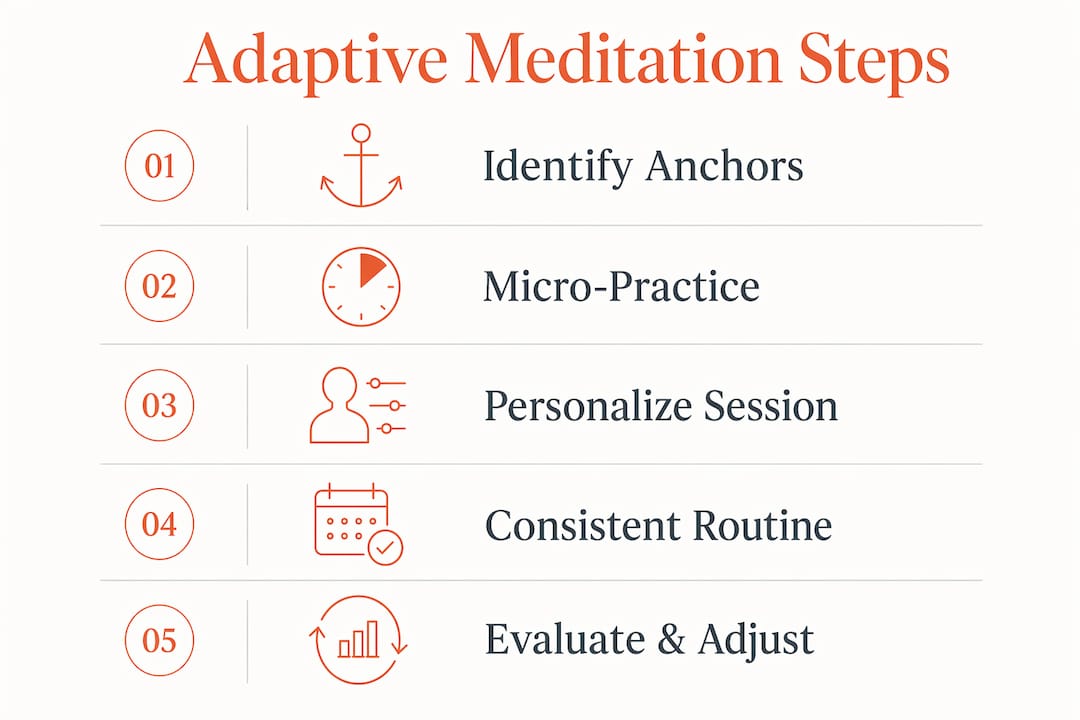
Building a sustainable routine requires three things: anchors, a progression plan, and a goal. Without all three, most people plateau or quit within the first two weeks.
Here is a step-by-step approach:
- Choose your morning anchor. Pick one existing morning habit, waking up, making coffee, or brushing your teeth, and attach a 2-minute breathing practice to it. Do this for seven days before adding anything else.
- Add a midday reset. After the morning anchor feels automatic, add a 3-minute sensory check-in at lunch or between your morning and afternoon work blocks. A daily mindfulness routine built around everyday activities reduces mental noise and promotes calm without requiring schedule changes.
- Create an evening wind-down. A 5-minute body scan or gratitude practice before sleep closes the loop on your day and signals your nervous system to downshift.
- Set a specific goal. Goal-setting prompts in guided meditation apps modestly but measurably increase meditation frequency among engaged users. Decide on a number: “I will meditate five days this week” outperforms “I will try to meditate more.”
- Review and adjust weekly. Adaptive practice means you change what is not working. If the evening practice keeps getting skipped, move it earlier or shorten it.
Pro Tip: Write your three anchors on a sticky note and put it somewhere you will see it during each transition. Physical reminders outperform app notifications for the first two weeks because they are harder to dismiss.
Common mistakes to avoid: adding too many practices too fast, choosing anchors that are inconsistent (like “after the gym” when you only go three times a week), and treating a missed day as a reason to quit rather than a data point.
What are the best adaptive techniques for energy and stress relief?
The following techniques are organized by time of day and purpose. Each one takes five minutes or less and can be done without any equipment.
| Technique | Duration | Best time | Primary benefit |
|---|---|---|---|
| Diaphragmatic breathing | 2 minutes | Morning | Activates energy, reduces cortisol |
| Sensory check-in | 2 minutes | Midday | Breaks rumination, restores focus |
| 5-breath reset | 1 minute | Any transition | Immediate nervous system reset |
| Body scan fragment | 3 minutes | Afternoon or evening | Releases physical tension |
| Gratitude flash | 30 seconds | Post-meeting or post-task | Interrupts negative thought loops |
| Guided contextual session | 5 minutes | When stress peaks | Deep personalized relief |
Morning practices should activate rather than sedate. Five slow diaphragmatic breaths followed by a 60-second awareness sweep of your body, noticing what feels ready and what feels tight, sets a tone of presence rather than reactivity. This is fundamentally different from a relaxation practice. The goal is energy, not drowsiness.
Midday resets are the most underused tool in flexible meditation routines. Most people push through the afternoon slump with caffeine. A 2-minute sensory check-in does the same job without the crash. You can also try energy-focused meditations specifically designed to restore vitality during the workday.
Evening practices should wind down rather than activate. A 5-minute body scan that moves from feet to head, combined with naming three specific things that went well, prepares your nervous system for recovery sleep. The specificity matters. “Today was fine” does nothing. “I handled that difficult email well” does.
Key takeaways
Adaptive meditation techniques daily work because they match the practice to the moment, the person, and the available time, making consistency achievable for anyone with a busy schedule.
| Point | Details |
|---|---|
| Micro-practices beat long sessions | 30-second to 5-minute practices done consistently outperform occasional long sessions for habit formation. |
| Personalization drives engagement | AI-personalized sessions like MindfulAgents showed measurable gains in mindfulness and engagement over four weeks. |
| Anchors reduce friction | Attaching meditation to existing habits like morning coffee removes the need for willpower or scheduling. |
| Goal setting increases frequency | Setting a specific meditation goal measurably increases how often users actually practice. |
| Energy is the right target | Adaptive techniques designed for energy restoration leave you more capable, not just more relaxed. |
Why I stopped chasing the “perfect” meditation practice
I spent two years trying to build a traditional meditation habit. Thirty minutes every morning, same cushion, same app, same guided voice. I failed repeatedly, not because I lacked discipline, but because the practice never responded to what I actually needed on a given day. A 30-minute body scan on a morning when I was already running late made me more anxious, not less.
What changed everything was treating meditation like a conversation rather than a prescription. On high-stress days, I do a 90-second breath reset before my first meeting and nothing else. On slower days, I do a full 5-minute guided session. The practice adapts to me, and that is the only reason it has lasted.
The biggest mistake I see people make is front-loading their practice with ambition. They commit to 20 minutes daily, miss three days, and conclude they are “not a meditation person.” The research on sustainable mindfulness habits is clear: consistency at low intensity beats intensity at low consistency every time. Start with one anchor. Do it for two weeks. Then add another.
Technology helps, but it is not the point. Apps like Mosaiic work because they remove the cognitive load of deciding what to practice. You describe what is draining you, and the session is written for that. That kind of responsiveness is what makes the difference between a practice you maintain and one you abandon. If you are curious about why so many meditation apps fall short for most users, the answer almost always comes back to a lack of personalization.
The goal is not to become someone who meditates. The goal is to feel better on more days than you do now. Adaptive practice is the fastest path to that.
— Giorgio
Try Mosaiic for your daily adaptive practice
If you have been reading this and thinking “I know I should meditate, but I never know what to do,” Mosaiic was built for exactly that problem.
Mosaiic generates a personalized 5-minute guided session every day based on what is actually draining you. You describe your situation, whether it is burnout, low motivation, or a rough week, and the app writes and narrates a meditation specific to that context. Each session builds on the last, so the practice evolves as you do. The positioning is deliberate: energy first, calm second. You leave sessions feeling more capable, not ready for a nap. Mosaiic offers a Free tier to start, with Starter and Daily (Pro) plans for those who want a full adaptive practice. Start your first session and see what a practice built around your actual life feels like.
FAQ
What are adaptive meditation techniques?
Adaptive meditation techniques are personalized mindfulness practices that adjust their content, duration, or timing based on your current stress level, mood, or context. The goal is to match the practice to the moment rather than applying a fixed session regardless of your state.
How long do daily adaptive meditation sessions need to be?
Sessions can be as short as 30 seconds. Research on micro-mindfulness shows that consistency and frequency matter more than session length, making brief daily practices more effective than occasional long ones.
Can AI really personalize a meditation session?
Yes. Systems like MindfulAgents demonstrated in a four-week study that AI-personalized sessions significantly improved engagement and mindfulness scores compared to standard guided meditations. Apps like Mosaiic use this same principle to generate sessions tailored to your specific situation each day.
What is the best time of day for adaptive meditation?
The best time is any transition you already make daily, such as morning coffee, the start of lunch, or the moment before sleep. Anchoring practice to existing habits removes the need to find extra time and dramatically improves adherence.
How do I stop skipping my daily meditation practice?
Set a specific frequency goal and attach your practice to a reliable daily anchor. Research from a large-scale JMIR study found that users who set explicit meditation goals practiced significantly more often than those who did not.