Meditation That Builds Over Time: Your Growth Guide
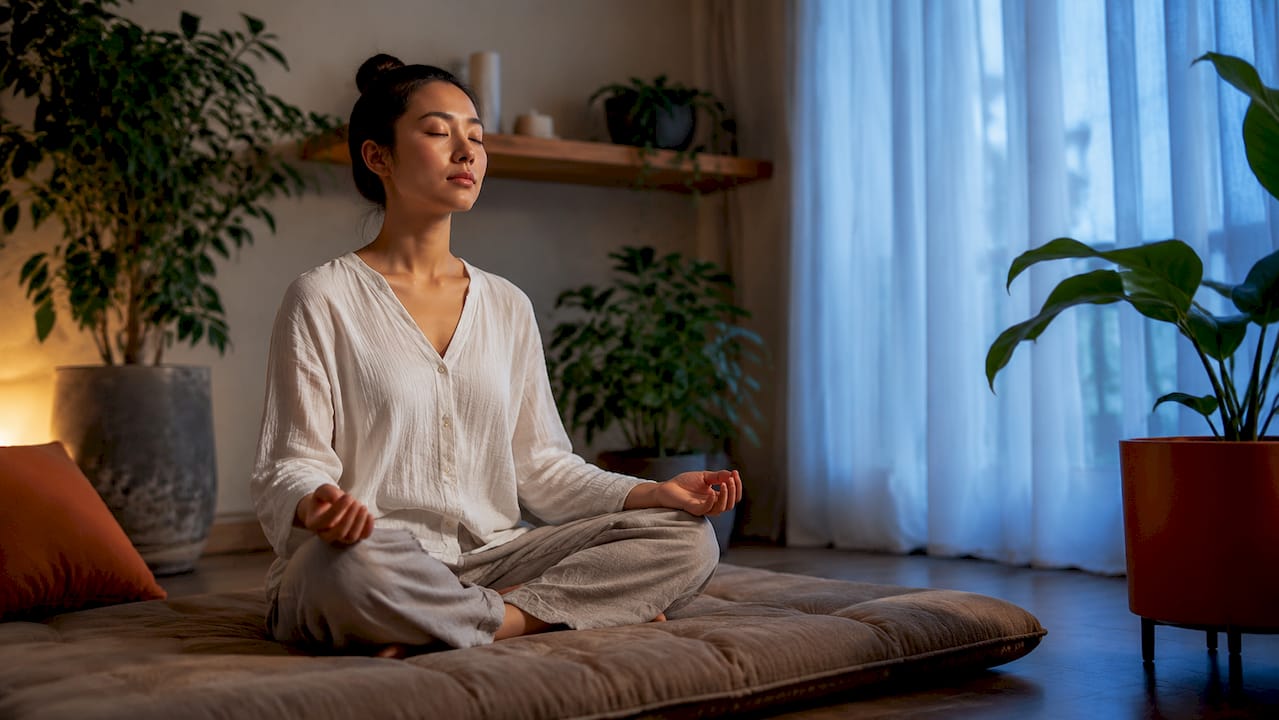
Progressive meditation is a gradual, cumulative practice where each session compounds on the last to create lasting changes in energy, focus, and personal growth. Unlike one-off relaxation techniques, meditation that builds over time works by reshaping neural pathways through repetition, a process neuroscientists call neuroplasticity. Research shows that starting with just 2–5 minutes daily is 90% more effective for long-term consistency than jumping into longer sessions. The industry term for this approach is progressive meditation, and it pairs naturally with techniques like Progressive Muscle Relaxation (PMR) to fight the kind of deep, persistent drain that no amount of sleep seems to fix.
Why meditation that builds over time starts with 2 minutes
The single biggest mistake people make is treating their first week of meditation like a training montage. They sit for 20 minutes, hate it, and quit by thursday. The science points in the opposite direction.
Short initial sessions focus the first two weeks on building habit neural pathways, not achieving specific meditative states. That distinction matters. Your brain’s basal ganglia, the region responsible for automatic behavior, needs repetition at low resistance to encode a new routine. Forcing long sessions too early raises resistance and kills the habit before it starts.
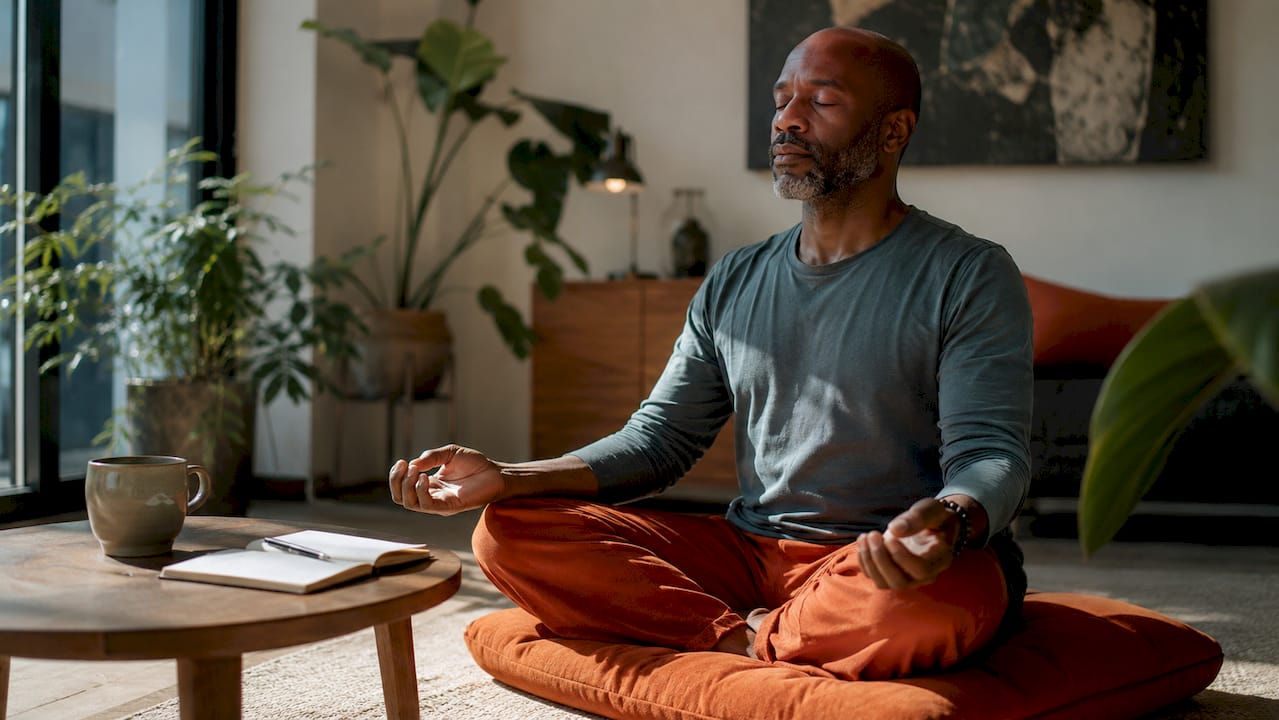
Meditation also increases dopamine release linked to reward and motivation. That dopamine loop is what makes the habit self-reinforcing over time. But it only kicks in when the practice feels achievable, not punishing.
Here is what a minimum viable practice looks like in the first month:
- Week 1–2: 2–3 minutes daily, same time each day, no exceptions for quality
- Week 3–4: Extend to 5 minutes, still prioritizing consistency over depth
- Day 21–30: Most people report the practice becomes automatic, no longer requiring willpower to start
- Anchor point: Link meditation to an existing habit like morning coffee or brushing your teeth
That last point is called habit stacking. Linking meditation to an established routine reduces friction, especially when your mental energy is already low. You are not relying on motivation. You are borrowing momentum from a behavior your brain already runs on autopilot.
Pro Tip: Never increase session length during a week when your schedule is disrupted. Protect the streak first. Length comes later.
How to progressively deepen your practice for growth and energy
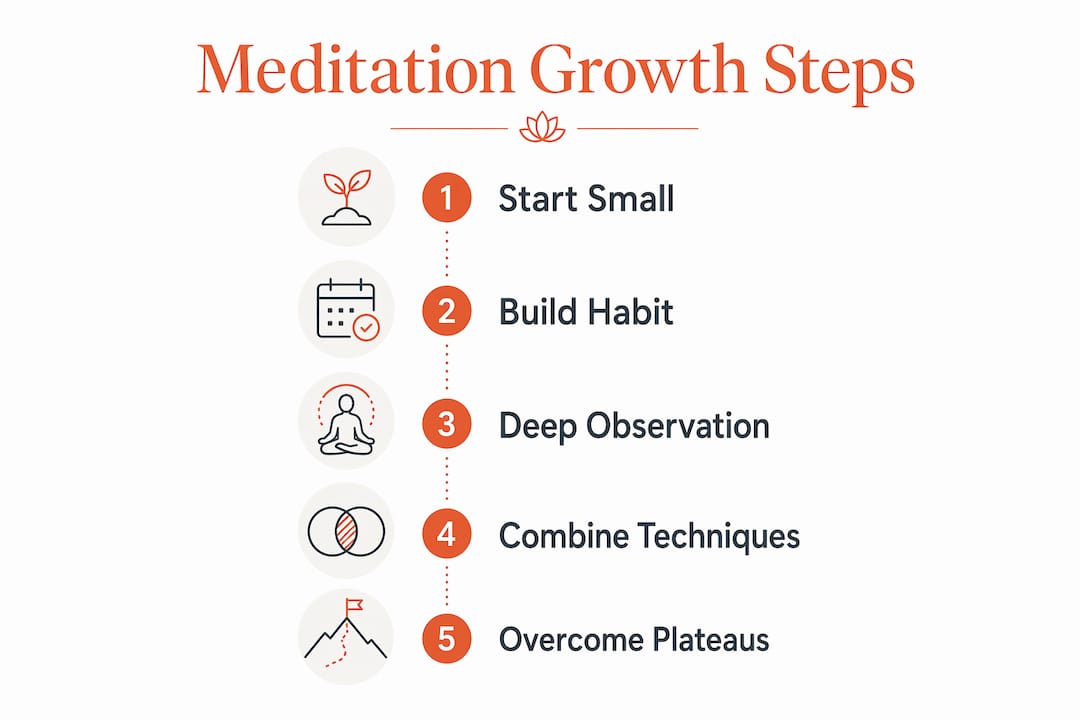
Once the habit is automatic, the real work begins. Progressive meditation techniques shift from habit formation to genuine personal development. The goal changes from “show up” to “go deeper.”
A structured progression looks like this:
- Weeks 1–4: Establish the daily habit at 2–5 minutes. Focus only on breath awareness.
- Weeks 5–8: Extend to 8–10 minutes. Introduce self-observation: notice thoughts without reacting to them.
- Weeks 9–12: Add emotional regulation themes. Sit with discomfort for 30–60 seconds before redirecting attention.
- Month 4 onward: Introduce body scan sequences or PMR as a complement to seated meditation.
- Ongoing: Use a progression tracking tool to log session length, mood before and after, and energy levels.
The self-observation phase in weeks 5–8 is where meditation for personal growth actually begins. Meditation’s true purpose for long-term growth lies in self-observation, which allows conscious reshaping of behavior far beyond simple stress relief. You start noticing patterns in how you react, what drains you, and where your attention defaults under pressure.
How PMR complements gradual mindfulness training
Progressive Muscle Relaxation works differently from meditation at a physiological level. Meditation is a top-down process, meaning the brain signals the body to relax. PMR is bottom-up: you tense muscles at roughly 70% of maximum force for 5–10 seconds, then release, triggering the inverse myotatic reflex and activating the parasympathetic nervous system directly through the body.
Using both methods together produces stronger energy restoration than either alone. Think of meditation as clearing mental noise and PMR as physically discharging stored tension. When you feel drained, that drain often lives in both places simultaneously.
| Method | Direction | Primary target | Best used when |
|---|---|---|---|
| Meditation | Top-down (brain to body) | Mental noise, reactivity | Racing thoughts, emotional fatigue |
| PMR | Bottom-up (body to brain) | Muscle tension, physical stress | Physical tightness, body-held anxiety |
| Combined | Both pathways | Full energy restoration | Deep or chronic drain |
Pro Tip: Try a 5-minute meditation followed immediately by a 5-minute PMR sequence. The combination hits both neurological pathways and leaves you noticeably more restored than either practice alone.
What to do when your meditation practice hits a wall
Plateaus are not a sign that your practice is broken. Growth in meditation is not linear. Dry spells and flat phases indicate that your brain is adapting to a higher level of awareness, consolidating gains before the next shift. Treating them as failure causes most people to quit right before a breakthrough.
Common signs of a plateau include:
- Sessions feel mechanical or emotionally flat
- You notice no obvious change in mood or energy after sitting
- Motivation to start the session drops noticeably
- The practice feels like a chore rather than a reset
The counterintuitive response is to keep going without changing anything. Practitioners who continue through dry phases reach permanent personality-level changes. Those who stop during plateaus miss the fundamental shifts that were already in progress.
“The goal during a plateau is not to feel something. The goal is to show up. The feeling returns on its own schedule.” — Positivity.org, Mindfulness Mountain
Practical strategies for staying consistent through a plateau:
- Shift your success metric from “how it felt” to “did I sit”
- Use a daily meditation routine framework to remove decision fatigue
- Tell one person about your practice. Social accountability reduces dropout significantly
- Accept that meditation progress includes subtle shifts, not dramatic overnight changes
The last point is worth sitting with. Most people expect meditation to feel like a revelation. The actual experience is quieter. You notice you reacted less to something that used to set you off. You realize you slept better three nights in a row. The changes are real. They are just not loud.
Tools and techniques that support long-term meditation habits
The right tools do not replace the practice. They reduce the friction that stops you from starting and help you see progress you would otherwise miss.
Digital tools fall into a few useful categories:
- Meditation timers: Simple apps like Insight Timer provide structure without distraction. A gentle bell at the start and end removes the urge to check the clock.
- Progression tracking apps: Tools that log session length, mood, and consistency give you visible evidence of growth. Seeing a 30-day streak has a measurable effect on motivation.
- Guided meditation platforms: Audio-guided sessions are especially useful in the first 60 days when the mind wanders most. They provide a focal point without requiring prior experience.
- PMR audio guides: Structured recordings walk you through the tense-and-release sequence, making it easy to combine with seated meditation.
Tracking meditation progress with digital tools helps maintain motivation and supports sustainable habit development. Apps that remind, track consistency, and adjust guidance based on your input improve long-term adherence. That last feature, adaptive guidance, is the one most generic timers lack.
When choosing a meditation app for a progressive practice, look for these features specifically:
- Session history with mood or energy tagging
- Adaptive content that changes as your practice deepens
- Short session options (under 5 minutes) for low-energy days
- Context-aware guidance, meaning sessions that respond to what you are actually going through
Mosaiic is built around that last feature. Users describe their current situation, whether burnout, low motivation, or a rough stretch, and the app generates a 5-minute guided session written and narrated for that specific context. Each session builds momentum and energy by connecting to the previous one, so the practice evolves as you do rather than repeating the same generic script.
Key takeaways
Meditation that builds over time works because consistent short sessions create automatic habits, which then support deeper personal growth and sustained energy restoration.
| Point | Details |
|---|---|
| Start with 2–5 minutes | Short daily sessions build habit pathways faster than longer, infrequent ones. |
| Use habit stacking | Anchor meditation to an existing routine to remove reliance on motivation. |
| Combine meditation with PMR | Both methods target different physiological pathways for stronger energy recovery. |
| Plateaus signal progress | Dry phases mean your brain is consolidating gains, not that the practice has failed. |
| Track your consistency | Digital tools that log mood and session length make invisible progress visible. |
What I have learned from years of watching people build this practice
The most common thing I see is people treating meditation like a performance review. They sit down, finish the session, and immediately ask themselves: “Did that work?” That question is the enemy of the practice.
The sessions that feel like nothing are often the ones doing the most work. I have watched people push through six weeks of flat, mechanical sitting and then describe a shift in how they handle conflict at work or how quickly they recover from a bad night. They did not feel it happening. It happened anyway.
The combination of meditation and PMR took me a long time to take seriously. I thought of them as separate tools for separate problems. The neuroscience changed my mind. When you are genuinely drained, the tension is not just mental. It lives in your shoulders, your jaw, your chest. Meditation alone addresses the top layer. PMR reaches the physical residue that meditation cannot touch from the inside out. Using both on the same day feels different from using either alone. That difference is not subtle.
My practical advice: do not wait until you feel ready to meditate. The days you least want to sit are the days the practice earns its keep. Five minutes on a terrible tuesday morning, stacked after your first cup of coffee, is worth more than a perfect 20-minute session you keep postponing to the weekend.
— Giorgio
How Mosaiic supports your progressive meditation practice
If you are tired of generic guided sessions that sound the same every day, Mosaiic takes a different approach.
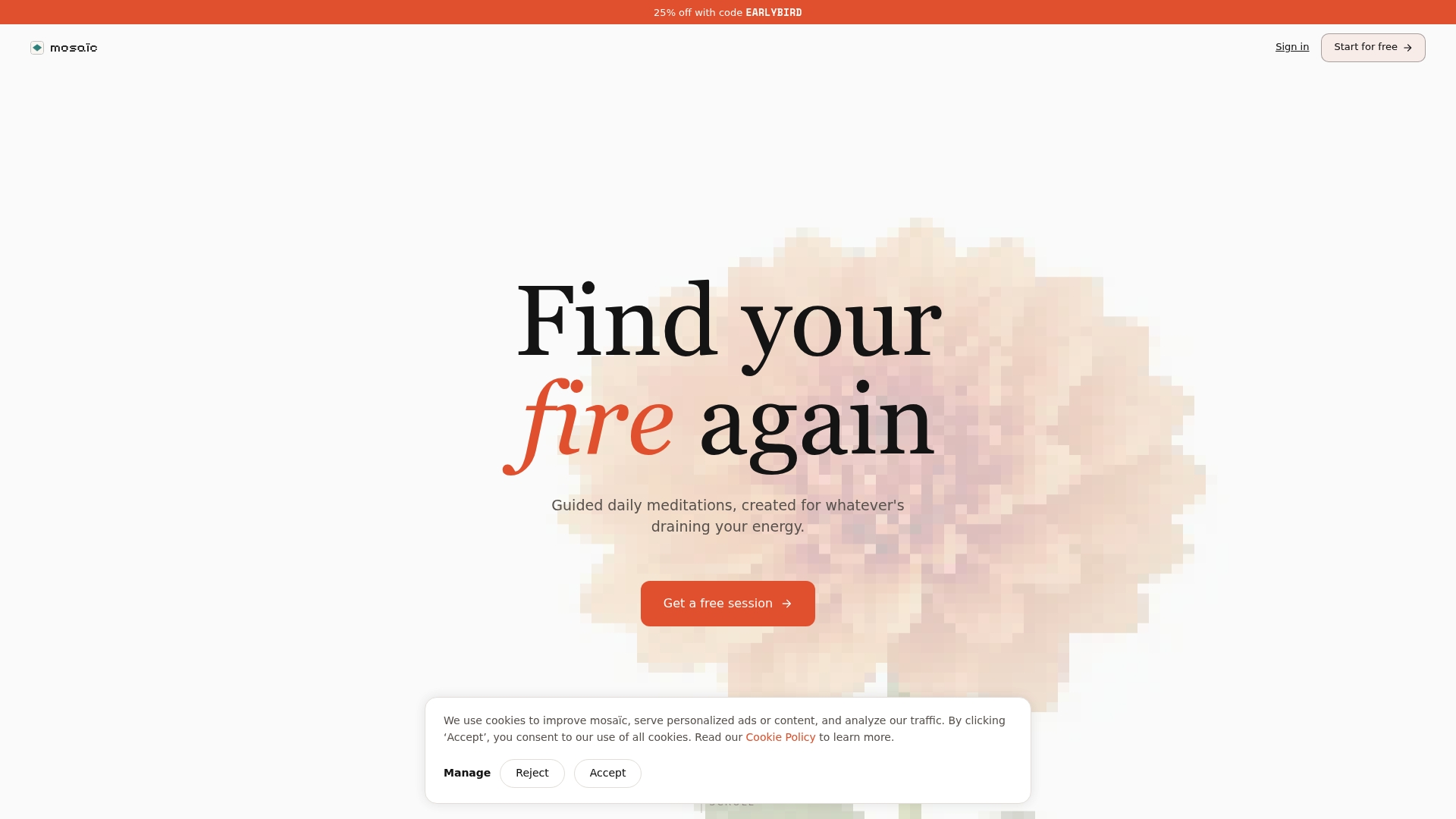
Mosaiic generates a new 5-minute guided meditation each day based on what is actually draining you right now. You describe your situation, and the app writes and narrates a session built for that specific context. Each session connects to the last, so your practice evolves instead of repeating. The positioning is direct: energy, not just calm. Mosaiic is designed to leave you fuller, not sleepier. Three tiers are available, Free, Starter, and Daily (Pro), so you can start without a commitment. If you are ready to build a personalized daily practice, Mosaiic is built for exactly that.
FAQ
What is progressive meditation?
Progressive meditation is a practice where session length, depth, and complexity increase gradually over weeks and months. The goal is to build automatic habits first, then layer in deeper techniques like self-observation and emotional regulation.
How long does it take for meditation to build over time?
A 30-day consistent practice is enough for most people to shift from effortful to automatic. Deeper personal growth changes, like improved emotional regulation, typically emerge after 8–12 weeks of consistent daily practice.
Why do I feel nothing during meditation sessions?
Flat or emotionally neutral sessions are a normal part of gradual mindfulness training. They often signal a consolidation phase where the brain is adapting to a higher baseline of awareness, not a sign that the practice has stopped working.
Can I combine meditation with other relaxation techniques?
Yes. Pairing meditation with Progressive Muscle Relaxation addresses both mental and physical sources of drain. Meditation works top-down from brain to body, while PMR works bottom-up from body to brain, making the combination more effective than either method alone.
How do I stay consistent when motivation drops?
Habit stacking is the most reliable method. Link your meditation session to an existing automatic behavior like making coffee or brushing your teeth. This removes the need for motivation entirely and keeps the practice running even on low-energy days.