How Meditation Differs from Relaxation: A Clear Guide
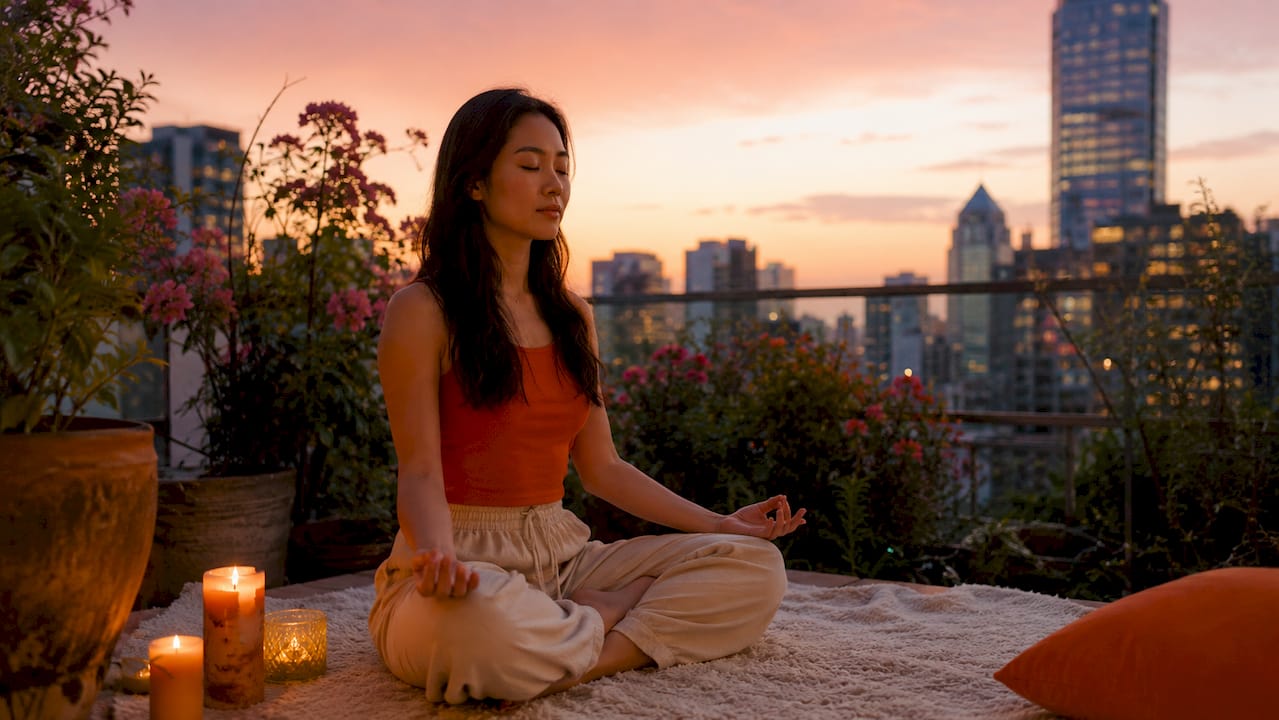
Meditation is a deliberate practice that trains your mind to sustain attention and awareness, while relaxation is the process of releasing physical and mental tension to achieve calm. These two practices are not the same thing, yet most people use the words interchangeably. Understanding how meditation differs from relaxation changes what you expect from each practice, and that shift in expectation determines whether you actually benefit. Research from Mindful.org, Simply Psychology, and The Conversation confirms that meditation trains attention, not relaxation. Relaxation may follow, but it is never the point.
How meditation trains awareness differently from relaxation techniques
Meditation and relaxation operate through entirely different mechanisms. Meditation is a formal practice designed to build mindfulness systematically, while relaxation techniques aim directly to calm the body and nervous system. One trains the mind; the other soothes it.
During meditation, you are repeatedly asked to notice when your mind wanders and gently return your focus to a chosen object, such as your breath, a phrase, or a sensation. That act of noticing and returning is the practice itself. Relaxation techniques, by contrast, focus on downshifting the nervous system through physical methods. Progressive muscle relaxation, for example, works by deliberately tensing and releasing muscle groups to trigger a physical calm response. Diaphragmatic breathing activates the parasympathetic nervous system to reduce heart rate and cortisol.
The major meditation styles each train awareness in a distinct way:
- Focused attention meditation (such as breath-focused sitting practice) trains the ability to hold attention on a single object and recover it when distracted.
- Open monitoring meditation (such as Vipassana) trains broad, non-reactive awareness of all sensations, thoughts, and emotions as they arise.
- Loving-kindness meditation (Metta) trains directed emotional attention toward self-compassion and empathy for others.
- Progressive muscle relaxation releases physical tension systematically but does not train sustained awareness.
- Guided imagery uses visualization to induce calm but does not require the mind to observe itself.
The difference is structural. Meditation asks the mind to watch itself. Relaxation asks the body to let go.
Pro Tip: If you notice your mind wandering during meditation, that moment of noticing is not a failure. It is the exact skill you are building. Returning your attention once is one repetition of the mental training.

What are the main goals and outcomes of meditation vs relaxation?
The goals of meditation and relaxation diverge sharply, and confusing them leads to frustration with both practices.
Relaxation techniques predominantly aim to reduce physical stress symptoms and create immediate calm. A 20-minute body scan or a guided breathing session can lower perceived stress within minutes. The outcome is measurable and fast: slower breathing, reduced muscle tension, a quieter mind. That speed is the feature. Relaxation is designed for acute relief.
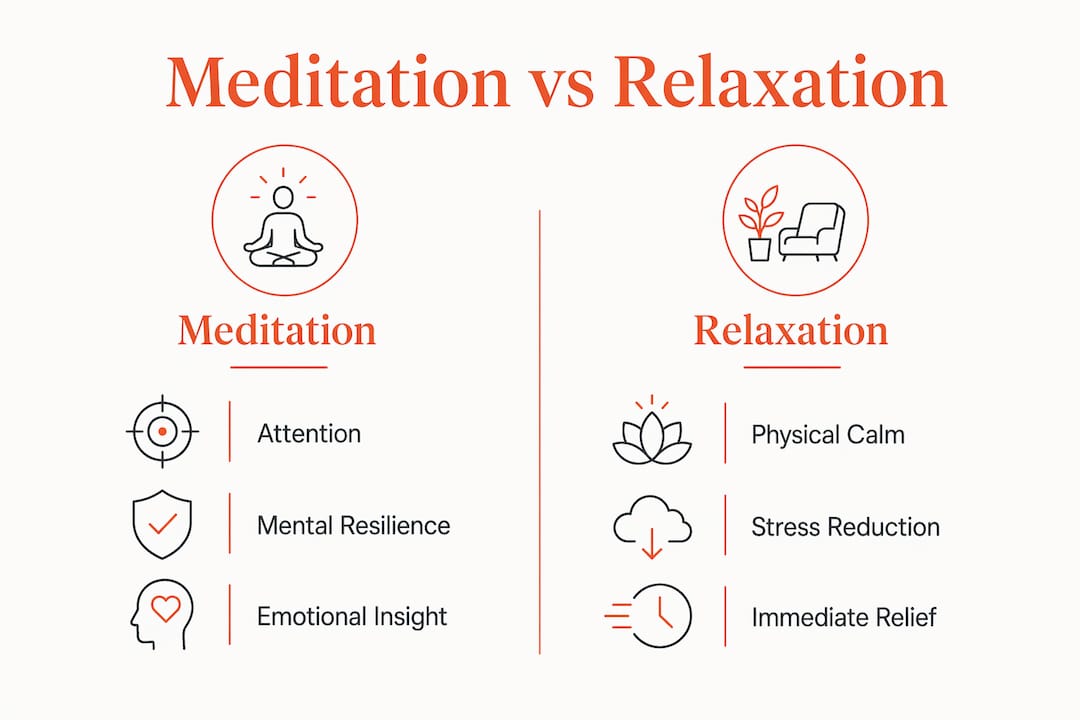
Meditation’s primary goal is mental resilience, insight, and emotional regulation built over time. MBSR reduced anxiety comparably to medication in a PCORI-funded randomized study, with only 15% of participants reporting side effects versus nearly 80% in the medication group. That finding matters because it positions meditation not as a relaxation tool but as a clinical-grade mental health intervention with a fundamentally different risk profile.
| Goal | Meditation | Relaxation |
|---|---|---|
| Primary aim | Train sustained attention and awareness | Reduce physical tension and stress symptoms |
| Timeframe for results | Weeks to months of consistent practice | Minutes to hours per session |
| Core mechanism | Noticing and returning attention | Activating the parasympathetic nervous system |
| Emotional outcome | Increased resilience and acceptance | Immediate calm and reduced arousal |
| Side effects | Occasional discomfort or emotional surfacing | Minimal; occasional drowsiness |
Relaxation is a side effect of meditation, not its purpose. Pursuing relaxation as a goal during meditation can actually reduce the likelihood of feeling relaxed, because the effort of chasing calm creates its own tension. Meditation works precisely because it releases the need for a specific outcome.
Pro Tip: Before each session, decide which practice you actually need. If you are acutely stressed and need to function in the next hour, a relaxation technique will serve you faster. If you are building long-term mental capacity, meditation is the investment.
How do meditation and relaxation feel differently during practice?
This is where most people get confused, and where expectations cause the most damage to a meditation practice.
Relaxation techniques feel good quickly. Progressive muscle relaxation produces a tangible physical release within minutes. Guided imagery creates a pleasant mental state almost immediately. The feedback loop is short and rewarding. You know it is working because your shoulders drop and your breathing slows.
Meditation often feels nothing like that, especially early on. A 20-minute mindfulness session showed participants noticed six times more unpleasant than pleasant experiences. That ratio is not a flaw in the practice. It reflects what mindfulness actually does: it increases your sensitivity to what is already present, including discomfort you were previously ignoring.
Here is what practitioners commonly experience during each practice:
- During meditation: Restlessness, boredom, intrusive thoughts, physical discomfort, emotional memories surfacing, and occasional moments of stillness.
- After meditation: Greater clarity, reduced reactivity, a sense of having processed something, and sometimes fatigue from sustained attention.
- During relaxation: Physical heaviness, warmth, slowed breathing, reduced muscle tension, and mental quieting.
- After relaxation: Refreshed, calm, sometimes drowsy, and ready to return to tasks with lower stress arousal.
Judging meditation by relaxation feelings can inadvertently train avoidance of difficult experiences. If you decide a session “didn’t work” because you felt anxious throughout, you are measuring the wrong thing. Progress in meditation often looks like increased noticing, not instant calm. That is a counterintuitive standard, but it is the accurate one.
How to choose or combine meditation and relaxation for mental wellness
Choosing between these practices is not a competition. The most effective mental wellness routines use both, applied at the right moments.
-
Use relaxation techniques for acute stress. When you have a presentation in 30 minutes, a conflict to navigate, or physical tension that is blocking focus, a 5-minute breathing exercise or body scan will serve you better than a formal meditation session. Relaxation techniques are fast-acting tools for immediate regulation.
-
Use meditation for long-term mental training. If your goal is emotional resilience, reduced anxiety over months, or a deeper relationship with your own thought patterns, consistent meditation practice is the method. Think of it the way you think of physical exercise: the benefits compound with repetition, not with intensity on any single day.
-
Combine them within a single session. Start with 3 to 5 minutes of diaphragmatic breathing to lower baseline arousal, then transition into focused attention or open monitoring meditation. The relaxation phase creates a calmer starting point; the meditation phase builds awareness from there. Many practitioners find this sequence reduces the restlessness that makes early meditation feel discouraging.
-
Extend mindfulness beyond formal practice. Mindfulness is an attentional quality that can be cultivated throughout daily life, not only on a cushion. Eating, walking, and even difficult conversations become opportunities to practice non-judgmental awareness. This is where the daily meditation momentum compounds into lasting change.
-
Use technology that distinguishes between the two. Many wellness apps blur the line between meditation and relaxation, offering sleep sounds and breathing exercises under the same “meditation” label. Apps that differentiate awareness training from relaxation content give you more control over what you are actually practicing. Knowing which mode you are in matters for setting accurate expectations and tracking real progress.
Key takeaways
Meditation builds awareness and mental resilience through sustained attention training, while relaxation reduces physical tension through nervous system downshifting. These are complementary practices with distinct mechanisms, goals, and timelines.
| Point | Details |
|---|---|
| Different mechanisms | Meditation trains attention; relaxation activates the parasympathetic nervous system. |
| Different timelines | Relaxation works in minutes; meditation builds resilience over weeks and months. |
| Relaxation is a side effect | Chasing calm during meditation reduces its likelihood and trains avoidance. |
| Discomfort is normal in meditation | Noticing unpleasant experiences is a sign of progress, not failure. |
| Combine both strategically | Use relaxation for acute stress and meditation for long-term mental training. |
Why I stopped expecting meditation to feel like a hot bath
I spent the first two years of my meditation practice convinced I was doing it wrong. Every session that ended without a wave of calm felt like a failed attempt. I would sit for 15 minutes, notice my mind racing through to-do lists and old arguments, and conclude that relaxation techniques were simply more effective for me.
What I was missing is that I had the wrong scorecard entirely. Meditation is not a spa treatment. It is closer to strength training for the mind. The discomfort during a session, the restlessness, the surfacing of things you would rather not think about, is the resistance that builds the muscle. The relaxation techniques comparison I kept making was like comparing a gym session to a massage and deciding the massage was better exercise.
The shift that changed everything was separating the two practices deliberately. I kept a relaxation technique, specifically box breathing, for moments of acute stress. I kept meditation for the mornings, without any expectation of how it should feel. Within a few weeks, the meditation sessions stopped feeling like failures. They started feeling like information.
Digital tools have made this easier. Personalized apps that adapt to your context, rather than offering the same generic calm-down audio every day, make it far easier to show up consistently. The context-specific approach to guided sessions is the closest thing I have found to a practice that meets you where you actually are, not where a wellness brand assumes you should be.
— Giorgio
Build a practice that actually fits your life with Mosaiic
Understanding the difference between meditation and relaxation is the first step. Building a practice that holds is the harder part.
Mosaiic is a personalized meditation app that generates daily guided sessions based on what is actually draining your energy right now. You describe your situation, whether that is burnout, a rough week, or low motivation, and Mosaiic writes and narrates a 5-minute session specific to that context. Each session builds on the last, so the practice evolves as you do. The positioning is deliberate: energy, not just calm. If you are ready to move beyond generic audio tracks and build a meditation practice grounded in awareness training, start with Mosaiic and see what a session built for your day actually feels like.
FAQ
What is the core difference between meditation and relaxation?
Meditation trains sustained attention and awareness through deliberate mental practice, while relaxation focuses on releasing physical tension and calming the nervous system. Relaxation can be a side effect of meditation, but it is not the goal.
Can meditation make you feel worse before it gets better?
Yes. A 20-minute mindfulness session showed participants noticed six times more unpleasant than pleasant experiences, because meditation increases sensitivity to what is already present. This is a sign the practice is working, not failing.
Is mindfulness the same as meditation?
No. Mindfulness is an attentional quality that can be practiced throughout daily life, while meditation is the formal, structured practice used to build that quality systematically.
How effective is meditation compared to medication for anxiety?
A PCORI-funded randomized study found MBSR reduced anxiety comparably to medication, with only 15% of participants reporting side effects versus nearly 80% in the medication group. This positions meditation as a clinically meaningful intervention, not just a wellness trend.
When should I use relaxation techniques instead of meditating?
Use relaxation techniques when you need fast relief from acute stress, physical tension, or high arousal before a demanding situation. Use meditation as a long-term daily practice to build emotional resilience and mental clarity over time.